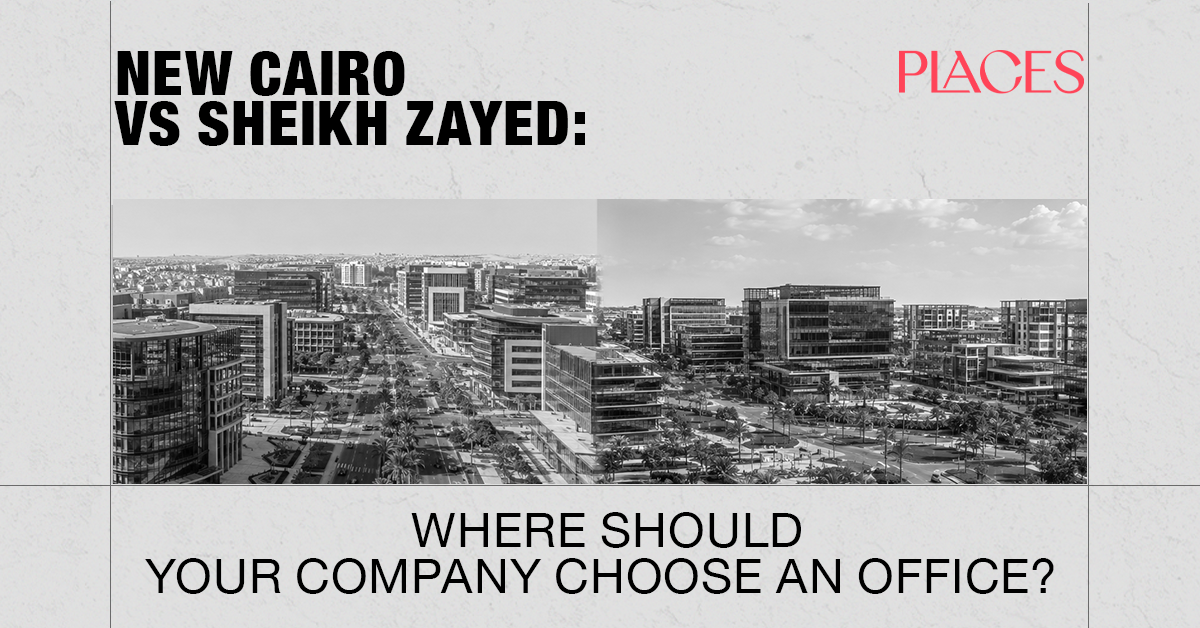
Choosing between New Cairo and Sheikh Zayed is not simply a real estate decision. It is an operating decision. New Cairo can be stronger for companies focused on East Cairo, the Fifth Settlement, Heliopolis, Nasr City, the New Administrative Capital corridor, or a wider New Cairo office ecosystem. Sheikh Zayed can be stronger for companies focused on West Cairo, 6th of October, Giza, Mohandessin, Dokki, and residential or commercial communities on the western side of Greater Cairo.
The best choice depends on where your employees live, where your clients are, how often people visit the office, what image the company needs, how much flexibility the team requires, and whether the office is for lease, purchase, or long-term regional presence.
For foreign companies, regional teams, and operators entering Egypt, this comparison is especially important. A location that looks strong on a map may not work well if the team, clients, and daily operations are moving in the opposite direction. A premium office in the wrong part of the city can create hidden costs through commute time, weak client access, parking issues, or future expansion friction.
The right question is not: “Is New Cairo better than Sheikh Zayed?” The better question is: “Which location makes the business easier to operate, easier to visit, easier to staff, and easier to grow?”
This guide compares New Cairo and Sheikh Zayed from a business perspective: East Cairo vs West Cairo, client access, employee commute, company image, office cost, business type, leasing or buying strategy, and future flexibility.
Why this comparison matters for companies
New Cairo and Sheikh Zayed are two of Greater Cairo’s most important office and business destinations outside the older central districts. Both areas offer modern office options, residential depth, services, road access, and strong business appeal. But they serve different geographic and operational needs.
New Cairo is more naturally connected to East Cairo. It can be practical for companies working with clients, employees, or partners in the Fifth Settlement, Heliopolis, Nasr City, Madinaty, El Rehab, Cairo Festival City, and the New Administrative Capital corridor. It also offers a broad office market with North 90 Street, South 90 Street, business parks, mixed-use projects, serviced offices, and administrative buildings.
Sheikh Zayed is more naturally connected to West Cairo. It can be practical for companies working with clients, employees, or partners in Sheikh Zayed, 6th of October, Giza, Mohandessin, Dokki, Smart Village surroundings, and western residential communities. It can also suit businesses that serve West Cairo households, companies, industrial zones, or professional networks.
The mistake is to compare the two areas as if they serve the same city map. They do not. New Cairo and Sheikh Zayed are both strong, but each one becomes stronger or weaker depending on the company’s client base, employee map, and operating model.
New Cairo: stronger for East Cairo and a broader office ecosystem
New Cairo is often the stronger choice when the company’s activity is concentrated in East Cairo. If clients, employees, meetings, or future growth are linked to the Fifth Settlement, Heliopolis, Nasr City, El Rehab, Madinaty, Cairo Festival City, or the New Administrative Capital corridor, New Cairo can reduce operational friction.
It also offers a broad range of office environments. North 90 Street can suit client-facing companies that need visibility and a recognized address. South 90 Street can suit companies looking for newer projects and a more balanced operating environment. Business parks can suit companies that need corporate image and professional building management. Serviced offices can suit market-entry teams or companies that need flexibility. Mixed-use districts can suit companies that benefit from nearby services and visitor activity.
For foreign or regional companies, New Cairo may be a practical first base because it offers many ways to enter the market. A company can start with a serviced office, move to a traditional leased office, or later buy an office if the location proves strategically useful.
However, New Cairo is not automatically right. If the company’s clients and employees are mostly in West Cairo, the distance can become a daily cost. A strong office market does not compensate for a poor fit with the company’s actual geography.
Sheikh Zayed: stronger for West Cairo and western business networks
Sheikh Zayed is often the stronger choice when the company’s activity is concentrated in West Cairo. If employees, clients, or partners are based in Sheikh Zayed, 6th of October, Giza, Mohandessin, Dokki, or western residential communities, Sheikh Zayed may be more practical than New Cairo.
For companies serving households, professionals, schools, medical communities, residential compounds, developers, industrial zones, or business networks in West Cairo, Sheikh Zayed can reduce travel time and improve client convenience. It can also support companies that want a modern office environment without requiring employees or clients to cross the city regularly.
Sheikh Zayed may be suitable for professional services, real estate companies, educational or training businesses, medical-related administrative uses, family-focused service providers, design and architecture firms, companies linked to 6th of October, and teams that rely on West Cairo talent.
But Sheikh Zayed is not automatically better for companies that simply want a “modern office.” If the business is connected to East Cairo, the New Administrative Capital corridor, or clients in New Cairo, choosing Sheikh Zayed may create unnecessary distance. The location should serve the company’s operating map, not just its preference for the area.
East Cairo vs West Cairo: follow the business map
The first layer of the decision is geography. A company should map where its employees live, where its clients are, where meetings happen, and where growth is expected. This simple exercise often makes the decision clearer.
If the company’s business activity is mostly east of the city, New Cairo will usually be more practical. If the company’s business activity is mostly west of the city, Sheikh Zayed will usually be more practical. If the company serves all of Cairo, the decision should depend on whether the office is mainly for clients, employees, management, operations, or brand presence.
For example, a regional consulting team serving clients in New Cairo, Heliopolis, and the New Administrative Capital corridor may benefit from a New Cairo office. A company working with clients in Sheikh Zayed, 6th of October, and Giza may benefit from a Sheikh Zayed office. A hybrid team with few visitors may choose based on where its core employees live rather than where the market looks more prestigious.
The office should not fight the company’s movement pattern. When the office is placed against the natural direction of the business, the company pays hidden costs in commute time, meeting friction, delayed arrivals, weaker attendance, and lower convenience.
Employee commute: the hidden cost of the wrong location
Many companies choose offices based on clients and image, then later discover that the team is paying the price every day. Commute time affects productivity, punctuality, hiring, retention, office attendance, and employee satisfaction.
If most of the team lives in East Cairo, New Cairo may make attendance easier. If most of the team lives in West Cairo, Sheikh Zayed may be more sustainable. If the team is split, the company should study the attendance model. Does the team come every day? Are there fixed office days? Is the office mainly used for meetings? Can hybrid work reduce commute pressure?
For foreign and regional companies, this is especially important because local hiring may depend on where the office is located. A company may attract different talent pools depending on whether it chooses East Cairo or West Cairo. The office location can influence not only commute time but also recruitment strategy.
A location that looks premium but weakens employee attendance may not be a good business decision. The best office location is not the one that impresses management once. It is the one the team can use consistently.
Client access: choose the side your clients actually use
If clients visit regularly, client access should be central to the decision. A company should ask where clients are coming from, how often they visit, how easy the address is to explain, whether parking is available, and what impression the building gives before the meeting begins.
New Cairo may be stronger if clients are based in the Fifth Settlement, Heliopolis, Nasr City, El Rehab, Madinaty, Cairo Festival City, or the New Administrative Capital corridor. Sheikh Zayed may be stronger if clients are based in Sheikh Zayed, 6th of October, Giza, Mohandessin, Dokki, or West Cairo residential communities.
But client access is not only about distance. A closer office in a weak building may create a poor experience. A slightly farther office in a well-managed building with clear access and parking may feel more professional.
The visitor journey matters: road access, entrance, signage, security, elevators, common areas, parking, and reception. If the office is client-facing, the building becomes part of the company’s service experience.
Company image: what does the office need to communicate?
Some companies need their office to communicate credibility, stability, and professionalism. Consulting firms, legal offices, financial advisory companies, engineering firms, regional offices, training providers, and companies receiving senior clients often need a strong office experience.
New Cairo can support a modern and active business image, especially in recognized office locations, business parks, and well-managed mixed-use projects. Sheikh Zayed can support a polished West Cairo presence, particularly for businesses serving western residential and commercial communities.
However, image is not only about the area name. A weak building in a famous area can damage perception. A well-managed building in a slightly less famous location can create a stronger experience. Clients notice the entrance, parking, elevators, security, and meeting environment before they judge the office size.
A company should choose the image it actually needs. If the office is part of the sales and trust process, the quality of the location and building matters. If the office is mainly for internal work, image may be less important than comfort, layout, and cost control.
Office cost: compare total value, not only rent or purchase price
New Cairo and Sheikh Zayed should not be compared by headline rent or purchase price alone. The real cost includes rent or acquisition price, maintenance, fit-out, furniture, utilities, internet, parking, moving cost, time to operate, lease escalation, and exit risk.
A lower rent may not be better if the office requires major fit-out, has weak parking, or sits in a building with poor management. A higher rent may be justified if the office is ready, well located for the team, strong for clients, and reduces operational friction.
The same applies to buying. A cheaper office may not be a better investment if resale demand is weak, the building is poorly managed, or the layout is inefficient. A more expensive office may hold value better if it serves a clear tenant profile and offers stronger building quality.
The correct comparison is not “New Cairo or Sheikh Zayed, which is cheaper?” It is “Which option delivers better operational value for our specific company?”
Business type: different companies need different locations
A consulting firm that serves East Cairo or regional clients may be better positioned in New Cairo, especially if client meetings are frequent. A consulting firm serving West Cairo executives, families, or companies may be better positioned in Sheikh Zayed.
A technology company may not need maximum visibility. It may choose based on employee commute, office layout, internet readiness, parking, and flexibility. If the team is in East Cairo, New Cairo may be more practical. If the team is in West Cairo, Sheikh Zayed may be better.
A training provider should prioritize visitor access, parking, room planning, permitted use, and nearby services. The right area depends on where trainees or clients come from.
A medical-related administrative office should review permitted activity, building rules, visitor experience, elevators, and parking carefully in either location.
A regional representative office may start with flexibility. It may choose a serviced office or ready-to-move office in the area closest to its first wave of clients and employees, then reassess later.
A back-office or support team should avoid overpaying for visibility it does not use. It should focus on cost, access, layout, employee comfort, and lease flexibility.
Leasing strategy: when flexibility matters
Leasing is often the safer starting point for companies that are still testing Egypt, changing team size, or unsure about long-term location needs. This is especially true for foreign or regional companies entering the market.
A company may lease in New Cairo if it wants to test East Cairo demand, client movement, employee access, and the New Administrative Capital corridor. It may lease in Sheikh Zayed if it wants to test West Cairo clients, 6th of October links, or a western employee base.
The lease should be reviewed carefully. Companies should check rent, maintenance, annual escalation, deposit, fit-out responsibility, rent-free period, parking terms, activity permissions, repair obligations, and exit conditions.
A flexible lease can protect the company from choosing the wrong side of the city too early. If the business map changes, the company can relocate without being tied to an owned asset.
Buying strategy: when ownership makes sense
Buying an office can make sense when the company is stable, knows its location needs, has long-term plans in the area, and can commit capital without pressuring operations. But buying too early can reduce flexibility.
A company should buy in New Cairo if it has a clear long-term need for East Cairo, wants exposure to a broader office ecosystem, and finds a building and unit that support both use and future exit. It should buy in Sheikh Zayed if West Cairo is clearly the company’s operating base and the office has strong long-term usability or rental demand.
For investors, the question is different. Who will rent the office? What type of tenant does the area attract? Is the unit size practical? Is parking sufficient? Is the building well managed? What is the likely vacancy period? Can the unit be resold later?
Ownership should not be based on area reputation only. It should be based on operating fit, tenant demand, building quality, total cost, and exit logic.
Expansion: which area gives your company room to grow?
Companies should not choose an office only for today. The location should support the next stage. Can the company expand in the same building, project, or area? Are there similar units nearby? Can the lease adapt? Will the team still fit in two or three years?
New Cairo offers a broad range of office options, which may help companies that expect growth or want to move between different office types over time. A team can start in a serviced office, move to a leased administrative office, then later consider a business park or owned headquarters.
Sheikh Zayed can also support growth, especially for companies connected to West Cairo. The key is whether the area has enough suitable supply for the company’s expected size and image.
Expansion is not only about square meters. It is about continuity. If a company grows, can it remain near clients and employees without starting the location decision again?
Parking and access: decisive in both locations
Parking and access are decisive in both New Cairo and Sheikh Zayed. A strong address becomes weaker if clients struggle to park or employees face daily arrival stress.
Companies should test access during working hours. Can employees reach the location from their residential areas? Can clients find the building easily? Are there multiple routes? Is parking allocated? Is visitor parking available? Are garage entrances clear? Does the building manage traffic well?
For client-facing companies, parking affects first impressions. For employee-heavy teams, parking affects attendance and comfort. For investors, parking affects tenant demand and resale value.
A practical office in a well-managed building may outperform a more prestigious address with daily access problems. The right location should work in real use, not only on a map.
Common mistakes when choosing between New Cairo and Sheikh Zayed
The first mistake is choosing based on personal preference. Management may prefer one area, but the business may operate in another direction. The company should follow clients, employees, and growth plans.
The second mistake is comparing the areas by price only. Total cost includes commute time, fit-out, maintenance, parking, lease terms, and future flexibility.
The third mistake is ignoring employees. A location that impresses clients but exhausts the team can weaken operations.
The fourth mistake is ignoring clients. A convenient office for the team may still be poor if clients cannot visit easily.
The fifth mistake is choosing a strong area but a weak building. The building experience can either support or damage the company’s image.
The sixth mistake is buying before testing. For companies unsure about the right side of Cairo, leasing first may be safer.
The seventh mistake is not planning for expansion. The office should support the company’s next stage, not only its current headcount.
How Places helps companies choose between New Cairo and Sheikh Zayed
At Places, we do not start with the question: “Which area is better?” We start with the business. We look at the company’s operating model, employee map, client locations, meeting flow, budget, lease or purchase strategy, image needs, parking requirements, and growth plans.
For one company, New Cairo may be the right choice because East Cairo clients, employees, and office options are more relevant. For another, Sheikh Zayed may be stronger because the business is built around West Cairo. For a foreign company entering Egypt, the right answer may be a flexible office first, not immediate ownership. For an investor, the right choice depends on tenant demand and exit potential.
Our role is to help companies read beyond listings and area reputation. A good office decision should make the business easier to operate, easier to visit, easier to staff, and easier to grow.
The goal is not to prove that New Cairo or Sheikh Zayed is better. The goal is to identify which location is better for your company.
Frequently asked questions about New Cairo vs Sheikh Zayed offices
Is New Cairo better than Sheikh Zayed for offices?
New Cairo may be better for companies focused on East Cairo, the Fifth Settlement, Heliopolis, Nasr City, and the New Administrative Capital corridor. Sheikh Zayed may be better for companies focused on West Cairo, 6th of October, Giza, and western residential communities. Neither is better for every company.
When should a company choose New Cairo?
A company should choose New Cairo if its clients, employees, partners, or growth plans are mainly connected to East Cairo. It is also suitable for companies that want a wider range of office options, including business parks, serviced offices, and mixed-use districts.
When should a company choose Sheikh Zayed?
A company should choose Sheikh Zayed if its clients, employees, or operations are mainly linked to West Cairo, 6th of October, Giza, Mohandessin, Dokki, or nearby residential and commercial communities.
Which location is better for foreign or regional companies?
Foreign and regional companies should choose based on their first client base, employee hiring map, meeting needs, and market-entry strategy. New Cairo may suit East Cairo and regional business activity, while Sheikh Zayed may suit West Cairo and 6th of October connections. A flexible lease is often safer at the beginning.
Which location is better for employees?
The better location is the one closer to the company’s actual employee base. If most employees live in East Cairo, New Cairo may be easier. If most live in West Cairo, Sheikh Zayed may be more practical.
Which location is better for client-facing companies?
Client-facing companies should choose the area that clients can reach more easily and that supports a professional visitor experience. Distance, parking, building quality, and address clarity are all important.
Should a company rent or buy in New Cairo or Sheikh Zayed?
Renting is often better when the company is still testing its location needs. Buying may make sense when the company is stable, has a clear long-term need in the area, and can own without limiting business growth or liquidity.
Final thoughts
New Cairo and Sheikh Zayed are both strong office locations, but they serve different business maps. New Cairo is usually stronger for companies connected to East Cairo, the Fifth Settlement, Heliopolis, Nasr City, and the New Administrative Capital corridor. Sheikh Zayed is usually stronger for companies connected to West Cairo, 6th of October, Giza, and western residential communities.
The right choice depends on how the company works. Where do employees live? Where are clients located? How often do people visit the office? What image does the company need? Is the office for lease, purchase, or market entry? Can the company expand later? What is the total cost of choosing one side of the city over the other?
The best office location is not the one that looks strongest on a listing. It is the one that makes daily operations easier, supports client trust, protects employee comfort, and gives the company room to grow. When the office location follows the business map, the decision becomes clearer.
Leave a Reply