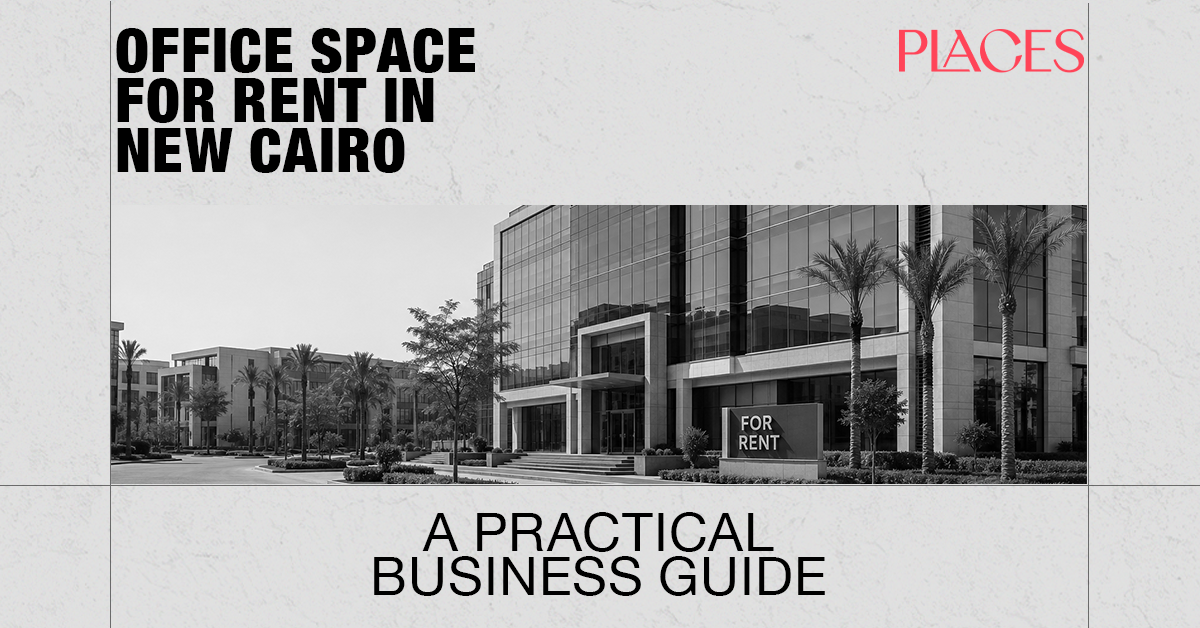
Blog

  • How to Evaluate Office Investment Yield in New Cairo

    How to Evaluate Office Investment Yield in New Cairo

    Evaluating office investment yield in New Cairo is not as simple as comparing the purchase price with an expected monthly rent. A serious office investment should be assessed through tenant demand, realistic rent expectations, vacancy risk, maintenance charges, fit-out cost, holding period, resale liquidity, and the quality of the building itself.

    The basic idea is simple: an office only becomes a good investment when the income, cost, risk, and exit potential make sense together. A high expected rent does not mean much if the unit stays vacant for months. A lower purchase price is not always attractive if the building is weak, parking is poor, the layout is inefficient, or the office needs expensive fit-out before it can be leased. A strong location is not enough if the specific unit is difficult for tenants to use.

    New Cairo can be an attractive office investment market because it has active business demand, modern office projects, strong residential surroundings, and multiple office submarkets such as North 90 Street, South 90 Street, business parks, mixed-use districts, serviced office environments, and administrative buildings. But that does not mean every office in New Cairo is a good investment.

    The right question is not: “What is the highest yield I can get?” The better question is: “What is the realistic net yield after vacancy, maintenance, fit-out, holding cost, and exit risk?”

    This guide explains how to evaluate office investment yield in New Cairo in a practical way before buying.

    What office investment yield really means

    Office investment yield is the return an investor expects to earn from renting out an office compared with the total money invested in buying and preparing it. Many investors think about yield as a simple percentage: annual rent divided by purchase price. That can be useful as a first look, but it is not enough.

    A more realistic yield should consider the full investment cost and the actual income after expenses. That means the investor should include purchase price, transaction costs where applicable, maintenance charges, fit-out cost, furnishing if needed, vacancy periods, leasing costs, repair obligations, and any time during which the office produces no income.

    There is a major difference between gross yield and net yield. Gross yield looks only at the rent compared with the purchase price. Net yield looks at what remains after costs and risk. For office investments, net yield is usually the more useful number because the cost of holding and preparing an office can materially change the result.

    The most important point is that yield is not only a mathematical calculation. It is a market judgement. The rent must be realistic, the tenant profile must be clear, the building must be attractive to occupiers, and the office should be easy enough to lease or resell if the investor’s plan changes.

    Start with tenant demand, not the advertised rent

    The first mistake in office investment is starting with an optimistic rent expectation before understanding tenant demand. The question should not be: “How much do I want to rent this office for?” It should be: “Who is likely to rent this office, and why would they choose it?”

    Different offices attract different tenants. A small office on or near North 90 Street may attract professional services, consulting firms, medical-related administrative uses, training providers, or small businesses that value visibility. An office on South 90 Street may attract companies looking for newer projects, calmer access, and balanced cost. A unit in a business park may attract more established companies or regional teams that care about corporate image and building management.

    Tenant demand depends on location, building quality, parking, unit size, layout, finishing condition, services, allowed activity, and total occupancy of the project. A good investor does not buy only because the area is popular. They buy because the specific unit fits a realistic tenant profile.

    Before buying, ask: Who is the most likely tenant? What size does this tenant need? What rent can this tenant realistically afford? How many similar units are available nearby? What makes this unit more attractive than the alternatives?

    If the tenant profile is unclear, the yield is unclear too.

    Rent expectation: use realistic rental logic

    Expected rent should be based on comparable offices, not hope. Investors often overestimate rent because they look at asking prices, premium listings, or best-case examples. But asking rent is not always achieved rent, and a high advertised rent does not guarantee a signed lease.

    A realistic rent expectation should consider the building, floor, unit size, layout, finishing, parking, lease terms, project occupancy, and tenant demand. Two offices in the same area can command different rents if one is ready to move into, better managed, easier to access, or more practical for tenants.

    Investors should also consider whether the office will be leased finished or unfinished. A finished office may attract tenants faster if the finishing is neutral and practical. An unfinished office may allow tenant customization, but it may also require incentives, fit-out contributions, or a longer vacancy period.

    The rent expectation should be conservative enough to survive market changes. If the investment only works at the highest possible rent, the risk is high. A strong investment should still make sense at a realistic rent, not only a best-case rent.

    Vacancy: the missing number in many yield calculations

    Vacancy is one of the most important factors in office investment yield. A unit that remains empty for several months can reduce the annual return significantly. Even a good office may not lease immediately if the rent is too high, the fit-out is not ready, the project is still building occupancy, or the tenant pool is limited.

    Vacancy risk is different from one office to another. A practical unit in a well-managed building with good parking and a clear tenant profile may lease faster. A large, expensive, highly customized, or poorly located office may take longer to lease.

    Investors should not calculate yield as if the office will be rented all year from day one. A more realistic calculation should include an expected vacancy period. This is especially important for offices in newer projects where the surrounding business environment may still be developing.

    Vacancy should also be considered between tenants. Even if the office is leased once, there may be a gap before the next tenant. A strong office investment is not only one that can attract a tenant; it is one that remains attractive to future tenants as well.

    Maintenance charges: recurring cost that affects net yield

    Maintenance charges can materially reduce office investment yield. Investors often focus on purchase price and expected rent, then treat maintenance as a small detail. In reality, maintenance is part of the recurring cost of owning an office, whether the unit is occupied or vacant.

    Maintenance charges may cover common areas, security, cleaning, landscaping, building systems, elevators, facility management, and shared services. In higher-quality projects or business parks, these charges may be higher, but they may also support better tenant demand and stronger long-term value.

    The key is not to avoid maintenance cost completely. The key is to understand whether the maintenance charge is justified by the building quality and whether it can be passed to the tenant under market-acceptable lease terms.

    If the office is vacant, the owner may still carry maintenance costs without rental income. This makes vacancy more expensive than many investors expect. Net yield should therefore include maintenance during both occupied and vacant periods.

    Before buying, ask: What are the maintenance charges? How are they calculated? Are there expected increases? What services do they cover? Are tenants in this market willing to pay them? What happens if the unit remains vacant?

    Fit-out cost: the investment before the income

    Fit-out cost can change the entire investment calculation. An office may look attractive because the purchase price is lower, but if it needs significant fit-out before it can attract tenants, the real investment cost may be much higher.

    Fit-out may include flooring, ceilings, lighting, partitions, air conditioning, electrical work, data points, meeting rooms, reception, furniture, branding, fire safety adjustments, and other technical requirements. The cost depends on the unit condition, tenant expectations, project rules, and quality level required.

    Investors should decide before buying whether they plan to lease the office as core and shell, semi-finished, fully finished, or furnished. Each strategy has different implications. A ready office may attract tenants faster, but the owner carries the upfront cost. A core and shell office may reduce owner spending, but it may appeal only to tenants willing to customize and wait.

    The wrong fit-out strategy can weaken yield. Over-investing in a fit-out that tenants do not value can reduce returns. Under-investing in a market where tenants expect readiness can increase vacancy. The right strategy depends on the target tenant profile.

    Holding cost: what you pay while waiting

    Holding cost is the cost of owning the office before it generates income or while it is between tenants. It can include maintenance, utilities, financing costs if applicable, repairs, marketing, taxes or fees where applicable, and the opportunity cost of capital.

    Many office investments look attractive when the unit is assumed to be rented immediately. They look different when the investor accounts for six months of vacancy, fit-out time, maintenance, and leasing effort. This is why holding cost should be included from the beginning, not added later.

    Holding cost is especially important in newer projects, larger units, or locations where tenant demand is still developing. The longer it takes to lease the office, the more the investor needs financial patience.

    A good investment does not require perfect timing to survive. If the entire return disappears after a short vacancy period, the investment may be too sensitive. A stronger investment should have enough margin to absorb realistic delays.

    Resale liquidity: can you exit if the plan changes?

    Resale liquidity is the ability to sell the office later without excessive time or discount. It is one of the most important parts of office investment, especially for investors who may need to release capital or change strategy.

    Liquidity depends on the location, project reputation, building quality, unit size, layout, parking, maintenance charges, finishing condition, and market demand. A practical office in a well-known, well-managed building is usually easier to resell than a highly customized or inefficient unit in a weaker project.

    In New Cairo, liquidity can differ significantly between submarkets and projects. A North 90 office may be more recognizable, but only if the building and unit are strong. A South 90 office may have good future potential, but the investor should check occupancy and services. A business park unit may appeal to a more corporate tenant or buyer, but the price and running costs must be justified.

    Before buying, ask: Who would buy this office from me later? Is the unit size suitable for many users or only a narrow segment? Is the layout flexible? Is parking sufficient? Is the building likely to remain attractive? Is the price realistic enough to protect future exit?

    If resale logic is weak, the investment depends heavily on rental income. If both rental demand and resale logic are weak, the risk is high.

    Location quality: not all New Cairo offices behave the same

    New Cairo is not one office market. Different locations serve different tenant profiles. North 90 Street may offer stronger visibility and client recognition. South 90 Street may offer newer projects and operational balance in selected locations. Business parks may offer stronger management and corporate image. Mixed-use projects may offer services and visitor convenience. Smaller administrative buildings may offer practical cost efficiency.

    An investor should not buy only because the office is “in New Cairo.” The exact location matters. A visible location may attract client-facing tenants. A calmer location may attract internal teams. A business park may attract companies seeking credibility and management quality. A mixed-use district may suit businesses that benefit from surrounding services.

    Location quality should be evaluated through tenant logic. Which type of tenant would prefer this location? Does the location help that tenant win clients, serve employees, reduce cost, or improve operations?

    A good investment location is not always the most famous. It is the location that creates clear demand for the specific office being purchased.

    Building quality: the yield protector

    Building quality protects yield because it affects tenant attraction, tenant retention, rent level, and resale value. A strong building can reduce vacancy risk and support better tenant confidence. A weak building can reduce demand even if the location is attractive.

    Building quality includes entrance experience, elevators, security, common areas, maintenance, cleanliness, air conditioning systems, fire safety, visitor management, signage rules, parking, and the quality of other tenants.

    Investors should evaluate the building like a tenant. Would a serious company want to bring clients here? Would employees feel comfortable? Is the building managed professionally? Are common areas maintained? Is parking practical? Are building rules clear? Does the tenant mix support the office’s marketability?

    For office investments, the unit is only part of the asset. The building is the platform that makes the unit usable and rentable. A strong building may justify a higher price if it protects income and resale value. A weak building can reduce net yield through vacancy, rent discounts, or exit difficulty.

    Unit size and layout: broad tenant appeal matters

    The best investment office is often not the largest or the most impressive. It is the one that appeals to a wide enough tenant base. Unit size and layout are central to this.

    A small or medium-sized practical office may be easier to lease than a large unit requiring a more specific tenant. A flexible layout may appeal to consulting firms, agencies, technology teams, professional services, or administrative users. A difficult layout with wasted corridors, columns, poor light, or awkward room planning may reduce tenant interest.

    Investors should review the usable area, not only the registered area. How many workstations can fit? Can meeting rooms be added? Is there a reception? Can the space be divided or opened? Is the layout suitable for multiple business types?

    Broad tenant appeal reduces vacancy risk. If only one narrow type of tenant can use the office, the investment is more fragile. A unit that can serve different tenants over time gives the investor more flexibility.

    Parking: direct impact on leasing demand

    Parking has become one of the most important office investment factors in Cairo and New Cairo. For many tenants, parking is not a luxury. It is a condition for daily operations. Employees, clients, executives, and visitors often rely on cars, and weak parking can make an otherwise attractive office difficult to lease.

    Investors should check whether the office has allocated parking spaces, visitor parking, clear garage access, parking charges, and enough capacity during working hours. They should also understand whether parking rights are included, optional, transferable, or subject to project rules.

    A building with strong parking can attract and retain tenants more easily. A building with poor parking may require rent discounts or take longer to lease. For resale, parking can also influence buyer interest.

    Parking should therefore be included in the yield calculation indirectly. It affects vacancy, achievable rent, tenant retention, and exit value.

    Lease terms: yield is shaped by the contract

    Even if the rent is attractive, lease terms can affect the real return. Investors should review lease duration, rent escalation, maintenance responsibility, fit-out obligations, rent-free periods, renewal options, early termination rights, repair responsibilities, and payment schedule.

    A high rent with weak tenant security may be less valuable than a slightly lower rent with stable occupancy and clear terms. A long vacancy followed by a short lease may produce weaker returns than expected. A tenant that requires major fit-out incentives may reduce the effective yield.

    Investors should also consider whether the office is better suited for long-term tenants or shorter leases. Corporate tenants may require better building quality and longer negotiation periods, but can bring stability. Smaller tenants may move faster, but can create more turnover.

    The lease is where expected yield becomes actual income. It should be reviewed as carefully as the property itself.

    Gross yield vs net yield

    A simple gross yield can be useful for screening, but it should not be the final investment metric. Gross yield usually compares annual rent to purchase price. Net yield adjusts for real costs and income interruptions.

    A more practical approach is to estimate annual rent, subtract expected vacancy impact, maintenance, owner-paid costs, leasing costs, repairs, and other recurring expenses, then compare the result with the full investment amount, including purchase price and fit-out.

    This does not need to become overly complicated for every investor. But the principle is important: an office investment should be evaluated based on what the investor actually keeps, not what the listing suggests.

    If gross yield looks attractive but net yield becomes weak after realistic costs, the investor should reconsider the purchase price, rent expectation, fit-out strategy, or even the unit itself.

    How to stress-test an office investment

    A good investor should stress-test the office before buying. This means testing what happens if the assumptions are less favorable than expected.

    What happens if rent is lower than expected? What happens if the office stays vacant for six months? What happens if fit-out costs more than planned? What happens if maintenance charges increase? What happens if resale takes longer than expected?

    If the investment still makes sense under conservative assumptions, it may be strong. If it only works under best-case assumptions, it is more speculative.

    Stress-testing is especially important in office real estate because tenant demand can be selective. Companies do not rent offices only because they are available. They rent offices that support their employees, clients, brand, and operating needs.

    A realistic investment decision should include a base case, a conservative case, and a downside case. This helps the investor avoid buying based only on optimism.

    Common mistakes when evaluating office yield in New Cairo

    The first mistake is calculating yield from expected rent only. Expected rent must be adjusted for vacancy, maintenance, fit-out, and realistic tenant demand.

    The second mistake is ignoring the tenant profile. If the likely tenant is unclear, the rental income is uncertain.

    The third mistake is treating New Cairo as one market. North 90, South 90, business parks, mixed-use projects, and smaller administrative buildings attract different tenants.

    The fourth mistake is underestimating fit-out cost. A cheaper office may require significant spending before it becomes rentable.

    The fifth mistake is ignoring parking. Poor parking can reduce tenant demand and resale value.

    The sixth mistake is buying a unit that is difficult to reuse. Over-customized or inefficient offices may be harder to lease or sell.

    The seventh mistake is assuming future resale will be easy. Liquidity depends on the project, building, unit, pricing, and market demand.

    The eighth mistake is using best-case assumptions only. A good investment should survive realistic delays and costs.

    How Places helps investors evaluate office yield

    At Places, we do not evaluate office investments only by expected rent or advertised yield. We start with the investment logic behind the asset: target tenant, location fit, building quality, parking, unit layout, fit-out strategy, holding cost, realistic rent, vacancy risk, and resale liquidity.

    For one investor, the right office may be a small, practical unit in a well-managed building with clear tenant demand. For another, it may be a business park office with stronger corporate appeal. For another, it may be a unit in an emerging area, but only if the price reflects the risk and the holding period is realistic.

    We also look at whether the investment can exit well. If the investor needs to sell, who is the likely buyer? If the first tenant leaves, who is the next tenant? If the market slows, does the unit remain practical and competitively priced?

    The goal is not to chase the highest advertised yield. The goal is to identify office investments where the income, cost, risk, and exit potential are aligned.

    Frequently asked questions about office investment yield in New Cairo

    What is a good office investment yield in New Cairo?

    There is no single good yield for every office. The right yield depends on location, building quality, tenant demand, vacancy risk, maintenance, fit-out cost, and resale liquidity. A lower-risk office may justify a lower yield, while a higher-risk office should offer stronger compensation for that risk.

    How do I calculate office investment yield?

    Start with expected annual rent, then adjust for vacancy, maintenance, owner-paid costs, fit-out, leasing costs, and holding expenses. Compare the realistic net income with the total investment cost, not only the purchase price.

    Should I calculate gross yield or net yield?

    Gross yield is useful for a first comparison, but net yield is more important. Net yield reflects the actual return after costs, vacancy, and recurring expenses.

    What affects office rental demand in New Cairo?

    Rental demand is affected by location, building quality, parking, layout, finishing condition, surrounding services, tenant mix, access, price, and whether the office fits the needs of likely tenants.

    Is North 90 Street better for office investment?

    North 90 Street can be strong for visibility and client-facing tenants, but the investment still depends on the building, parking, unit layout, price, and tenant demand. The address alone is not enough.

    Is South 90 Street good for office investment?

    South 90 Street can be attractive in selected projects, especially where there are newer buildings, practical access, and balanced cost. However, investors should check occupancy, services, parking, and whether tenant demand is already visible.

    Should I buy a finished or unfinished office?

    A finished office may lease faster if the fit-out is practical and neutral. An unfinished office may allow customization but can increase vacancy time and setup cost. The better choice depends on the target tenant and investment strategy.

    Why does parking matter for office yield?

    Parking affects tenant demand, rent negotiation, vacancy risk, and resale value. In car-dependent office markets, weak parking can reduce the attractiveness of an otherwise good office.

    Final thoughts

    Evaluating office investment yield in New Cairo requires more than a simple rent-versus-price calculation. A serious investor should look at tenant demand, realistic rent, vacancy, maintenance, fit-out, holding cost, building quality, parking, unit layout, and resale liquidity.

    New Cairo can offer attractive office investment opportunities, but only when the specific office matches a real tenant need and has a clear path to income and exit. A famous location does not guarantee yield. A low price does not guarantee value. A high expected rent does not guarantee return.

    The best investment office is the one where the numbers and the market logic support each other. The tenant profile is clear, the building is strong, the unit is practical, the total cost is understood, and the exit route is realistic.

    When these elements align, yield becomes more than a hopeful percentage. It becomes a disciplined investment decision.
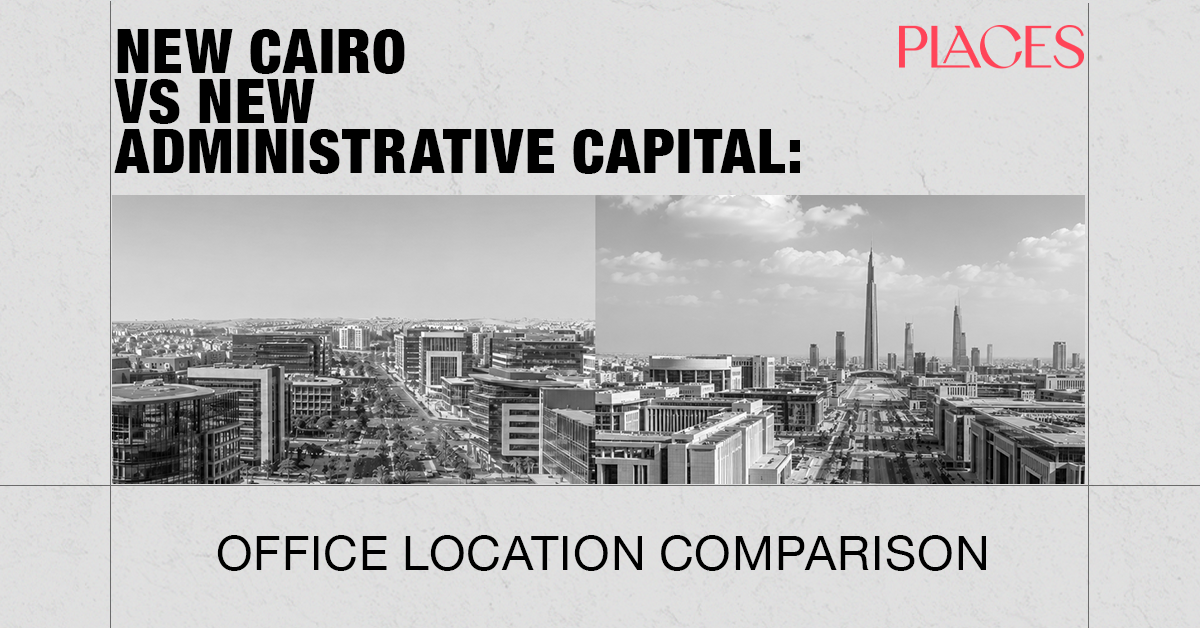
  • New Cairo vs New Administrative Capital: Office Location Comparison

    New Cairo vs New Administrative Capital: Office Location Comparison

    Choosing between New Cairo and the New Administrative Capital is not only a question of location. It is a question of business readiness, client access, institutional relevance, current demand, future demand, and risk tolerance.

    New Cairo is usually the stronger choice for companies that need an office to operate effectively today. It has a more mature business environment, a wider range of office options, stronger surrounding services, established residential communities, and clearer demand from companies already working across East Cairo. The New Administrative Capital may be the stronger choice for companies linked to government institutions, public-sector projects, large corporate mandates, or long-term investment exposure to Egypt’s new administrative center.

    The simplest way to compare them is this: New Cairo is often a current operating decision, while the New Administrative Capital is often a strategic or future-facing decision. That does not make one better than the other. It means each location serves a different type of company, investor, and risk profile.

    A company that needs employees, clients, suppliers, and services to work smoothly from day one may find New Cairo more practical. A company that regularly deals with ministries, government agencies, institutional projects, or the future corporate ecosystem around the capital may find the New Administrative Capital worth considering. An investor seeking clearer tenant demand may lean toward New Cairo. An investor with a longer horizon and higher risk tolerance may study selected opportunities in the New Administrative Capital.

    The right question is not: “Is New Cairo better than the New Administrative Capital?” The better question is: “Which location matches our business needs, timing, client base, and tolerance for future market risk?”

    Why this comparison matters

    New Cairo and the New Administrative Capital are both central to the future of East Cairo, but they are not the same type of office decision. New Cairo is an established office and residential market with business parks, administrative buildings, mixed-use districts, serviced offices, and strong links to the Fifth Settlement, Heliopolis, Nasr City, El Rehab, Madinaty, and East Cairo communities.

    The New Administrative Capital is different. It is built around a long-term national relocation and development strategy, with government institutions, major infrastructure, new business districts, and future population growth. Its logic is more institutional and future-oriented. It may become highly relevant for certain businesses, but its office market should be evaluated through readiness, timing, and actual demand, not only through long-term potential.

    This comparison is important because many companies confuse future importance with immediate usability. A location can be strategically important and still not be the best place for a company’s office today. At the same time, a location can be less mature today but highly relevant for a company with the right institutional client base or investment horizon.

    For companies and investors, the decision should be practical: who will use the office, who will visit it, when it needs to operate, what demand exists today, and what risks are being accepted for future upside.

    New Cairo: stronger business readiness today

    New Cairo is generally stronger in business readiness because it already functions as a mature office market. Companies can find active buildings, operating services, established business surroundings, and a wide range of office formats. This makes it easier to evaluate a real office decision rather than relying mainly on future expectations.

    For companies, business readiness means more than a delivered unit. It means employees can reach the office, clients can understand the location, services are nearby, parking can be tested, building management is visible, and the company can compare multiple alternatives before signing or buying.

    New Cairo offers this in several ways. North 90 Street can suit companies that need visibility and client access. South 90 Street can suit companies looking for newer projects and a more balanced operating environment. Business parks can suit companies that need stronger corporate image and building management. Serviced offices can suit market-entry teams and companies that need speed and flexibility. Mixed-use districts can suit companies that benefit from nearby services and visitor activity.

    This does not mean every New Cairo office is a good decision. Some buildings have weak parking, poor layouts, high costs, or uneven management. But the advantage is that companies can evaluate these issues based on current reality. They can visit, test, compare, negotiate, and make a decision from live market evidence.

    New Administrative Capital: stronger institutional and future relevance

    The New Administrative Capital has a different advantage. Its strength is linked to government presence, institutional activity, major projects, and the long-term shift of administrative and corporate gravity eastward. For companies that work with ministries, government agencies, public-sector programs, infrastructure projects, or large institutional clients, proximity to the New Administrative Capital may have real strategic value.

    This can apply to consulting firms, legal advisors, engineering firms, contractors, technology providers, government-services companies, financial advisory firms, training providers, facility-management operators, and companies supporting large corporate or public-sector projects.

    However, the New Administrative Capital should not be treated like a fully mature office market in the same way as New Cairo. Some areas and projects may be operational, while others may still be developing occupancy, surrounding services, and daily business activity. This changes the decision.

    For a company that needs immediate office performance, the key question is not whether the New Administrative Capital is important. It is whether the specific office, building, project, and surrounding area are ready for daily use today. For an investor, the key question is not whether the city has long-term potential. It is whether the timing, price, tenant profile, and holding cost justify the risk.

    Business readiness: current usability vs strategic positioning

    Business readiness is the first major difference between New Cairo and the New Administrative Capital. New Cairo usually offers stronger current usability. The New Administrative Capital may offer stronger strategic positioning for selected businesses, but its readiness depends heavily on the specific project and use case.

    A business-ready office is one where the company can operate with limited friction. Employees can commute, clients can visit, services are available, parking is manageable, the building is active, and maintenance is functioning. In New Cairo, many office decisions can be tested against these factors immediately.

    In the New Administrative Capital, companies need to be more specific. Is the office being chosen because the company truly needs to be near institutions? Are clients already there? Are meetings happening there regularly? Is the building occupied? Are services around the project active? Is the employee commute realistic?

    If the answer is yes, the New Administrative Capital may be a strong strategic choice. If the answer is still mostly based on future expectations, the company should treat the decision as a higher-risk, longer-horizon move.

    Client access: where do clients actually go?

    Client access can decide the location more clearly than price. If clients are based in New Cairo, the Fifth Settlement, Heliopolis, Nasr City, El Rehab, Madinaty, or East Cairo residential communities, New Cairo may be more practical. It is familiar, easier to explain, and already part of many business and residential movement patterns.

    If clients are government agencies, ministries, public-sector bodies, or companies operating inside or around the New Administrative Capital, then the New Administrative Capital may offer meaningful proximity. In that case, being closer to institutional decision-makers can reduce travel time and support the company’s positioning.

    The mistake is assuming that all clients will adapt to the company’s preferred location. A client-facing office should reduce friction. The visitor should be able to understand the address, reach the building, park, enter, and feel that the office supports the company’s professionalism.

    For companies with mixed client bases, New Cairo may currently be the more balanced choice. For companies with a focused institutional client base around the New Administrative Capital, the capital may be more relevant.

    Government and corporate relevance

    The New Administrative Capital’s strongest office case is government and institutional relevance. Companies that need to be close to public-sector activity may find value there, especially if meetings, permits, tenders, advisory work, or project coordination are connected to institutions based in the capital.

    This relevance can also extend to companies serving major developers, infrastructure projects, embassies, large corporate groups, or institutional clients expected to operate around the capital over time. For these companies, location is not only about convenience; it can be part of business development and relationship management.

    New Cairo, however, remains more relevant for a wider range of private-sector companies today. It serves established business activity, residential demand, corporate offices, professional services, retail-administrative uses, and companies connected to East Cairo’s active commercial life.

    So the distinction is important. The New Administrative Capital may be stronger for companies with institutional relevance. New Cairo may be stronger for companies with broader private-sector and operational relevance.

    Current demand vs future demand

    New Cairo has clearer current office demand. Companies are already leasing, buying, operating, expanding, and moving within the area. This makes it easier to assess tenant profiles, rental expectations, building performance, and resale logic.

    The New Administrative Capital has a different demand story. Some demand is current, especially around government and institutional use. But a large part of the office opportunity may depend on future corporate relocation, population growth, service maturity, and wider business adoption.

    For occupiers, current demand matters because it reflects whether the area is already working as a business environment. For investors, current demand affects how quickly an office can be leased and how easily it can be sold. Future demand can create upside, but it also creates timing risk.

    A New Cairo office may offer more visible evidence today. A New Administrative Capital office may offer future upside if bought in the right project, at the right price, with a realistic holding period. Neither should be judged emotionally. The decision depends on whether the buyer or tenant needs certainty now or accepts uncertainty for future potential.

    Risk tolerance: who should consider each location?

    Risk tolerance is one of the most important factors in this comparison. New Cairo may suit lower-risk occupiers and investors who want clearer current demand, more operating evidence, and more immediate usability. The New Administrative Capital may suit companies and investors with a stronger reason to be there and a higher tolerance for timing risk.

    A company that must operate smoothly from day one usually has lower tolerance for location risk. It needs a functioning environment now. A company entering a government-driven sector may accept more risk because proximity to institutions is strategically important.

    An investor seeking rental income in the near term may prefer New Cairo, where demand is easier to test. An investor seeking long-term capital positioning may study the New Administrative Capital, but should be prepared for vacancy risk, slower tenant absorption, service-development risk, and uncertain timing.

    The key is honesty. If the decision requires future growth to work, it should be treated as a future-facing decision. If the business needs the office to perform immediately, current readiness should matter more.

    Employee commute: daily use cannot be ignored

    Employees are often overlooked in office location decisions. A company may choose an office based on institutional relevance or future value, then discover that daily commute creates internal resistance. This is especially important when comparing New Cairo and the New Administrative Capital.

    New Cairo may be more practical for employees living in the Fifth Settlement, Heliopolis, Nasr City, El Rehab, Madinaty, and other East Cairo areas. It may also be easier for companies already hiring from New Cairo’s residential communities.

    The New Administrative Capital may work better if employees are already based nearby, if the company operates in a hybrid model, or if the team’s work is tied to institutional activity there. But if most employees live across older parts of Cairo or West Cairo, the location may increase commute pressure.

    Companies should map employee locations before deciding. If the office will be used daily, commute time becomes part of the real cost. If the office is used for meetings or institutional presence only, the employee commute may be less central.

    Office supply and project selection

    New Cairo offers a broader and more varied office supply today. Companies can compare traditional administrative offices, business parks, serviced offices, ready-to-move units, core and shell spaces, mixed-use projects, and smaller buildings. This variety helps companies match office choice to operating model.

    The New Administrative Capital also offers office supply across different projects and business districts, but project selection must be approached carefully. Buyers and tenants should verify delivery status, occupancy, infrastructure, building management, access, parking, maintenance, permitted use, and surrounding services.

    In New Cairo, the risk is often choosing the wrong building in a strong market. In the New Administrative Capital, the risk may include choosing too early in a project or location that has not yet matured enough for the company’s needs.

    In both locations, the unit itself matters. A good area cannot fix an inefficient layout, weak parking, poor building management, or unclear legal and operational terms.

    Leasing strategy: when flexibility matters

    Leasing is often the safer strategy when a company is unsure which location will fit long term. This applies strongly to the New Cairo vs New Administrative Capital decision.

    A company can lease in New Cairo to test East Cairo demand, employee access, client movement, and office size. If the area works, it can renew, expand, or later buy. If it does not, leasing gives the company room to adjust.

    In the New Administrative Capital, leasing may be a smart way to test institutional relevance without committing capital too early. A company can create a presence near relevant government or corporate activity while keeping flexibility if demand develops slower than expected.

    Lease terms should be reviewed carefully in both locations: rent, maintenance, escalation, deposit, fit-out responsibility, rent-free period, parking, activity permissions, repair obligations, and exit conditions. Flexibility is valuable when market timing is still evolving.

    Buying strategy: when ownership makes sense

    Buying in New Cairo may make sense for companies that are stable, need an East Cairo base, and want an office that can serve both current use and future resale or rental demand. It may also suit investors looking for a more tested office market with clearer tenant profiles.

    Buying in the New Administrative Capital may make sense for companies that have a strong strategic reason to be there, or investors with a longer time horizon and the ability to tolerate slower absorption. But the project, price, delivery status, and tenant profile must be evaluated carefully.

    An owner-occupier should ask: will this office still support our business in three to five years? An investor should ask: who will rent this office, when, at what realistic rent, and after what holding cost?

    Ownership is not only a financial decision. It is a commitment to a location, a building, a project, and a market timeline. The more future-dependent the decision, the more conservative the assumptions should be.

    Liquidity and exit potential

    Liquidity means the ability to lease, sell, or reposition the office if the company’s plans change. New Cairo may currently offer stronger liquidity because it has a larger active private-sector office market, a broader tenant base, and more established demand patterns.

    The New Administrative Capital may offer future liquidity if the city’s institutional and corporate ecosystem continues to mature. But liquidity there may be more project-specific and timing-sensitive. A strong unit in a strategic project may perform differently from a unit in a less active or less serviced development.

    For occupiers, liquidity matters because business needs change. The company may grow, downsize, relocate, or shift to hybrid work. For investors, liquidity is central to risk management. A property that is hard to lease or sell can tie up capital even if the long-term story is attractive.

    Before buying, ask: who is the next user if we no longer need this office? If that answer is clearer in New Cairo, the risk may be lower. If the answer depends on future institutional demand in the New Administrative Capital, the investment may require more patience.

    Total cost: compare the full commitment

    The total cost of an office includes more than rent or purchase price. It includes maintenance, fit-out, furniture, utilities, internet, parking, moving cost, setup time, taxes or transaction costs where applicable, lease escalation, vacancy risk, and exit risk.

    New Cairo may appear more expensive in some projects, but it may reduce uncertainty if the office is ready, services are active, and demand is visible. The New Administrative Capital may offer attractive pricing or future upside in some cases, but hidden costs may appear through delayed use, incomplete services, longer vacancy, or slower tenant demand.

    The right comparison is not “Which location is cheaper?” It is “Which location creates better value for the company’s timing, client base, operating needs, and risk tolerance?”

    A company that needs immediate operations should value readiness. An investor with a long horizon may value future positioning. But both should calculate the full cost before deciding.

    Best-fit companies for New Cairo

    New Cairo is often a strong fit for private-sector companies that need an office working today. This includes consulting firms, technology companies, professional services, training providers, regional offices, back-office teams, medical-related administrative uses, and companies serving East Cairo clients.

    It can also suit foreign companies entering Egypt because it offers a wide range of office formats and a more active operating environment. A company can start flexibly and then scale into a larger office if the market fit is proven.

    New Cairo is especially relevant when employees, clients, and services are already concentrated in or around East Cairo. It is also useful for companies that want multiple location options inside one office ecosystem.

    Best-fit companies for the New Administrative Capital

    The New Administrative Capital may be a strong fit for companies that are institutionally connected. This includes firms working with government agencies, public-sector projects, infrastructure, real estate development, engineering, legal advisory, financial advisory, technology, training, facility management, and corporate services linked to the new capital.

    It may also suit companies that want to establish a strategic presence early, especially if their clients or partners will increasingly operate there. For these companies, location may be part of business positioning, not only convenience.

    However, companies should avoid choosing the New Administrative Capital only because it is new or future-facing. The office should serve a clear business reason, and the project should be ready enough for the intended use.

    Common mistakes when comparing New Cairo and the New Administrative Capital

    The first mistake is assuming New Cairo is always safer. It is more mature, but individual office decisions can still fail because of weak buildings, poor parking, high costs, or inefficient layouts.

    The second mistake is assuming the New Administrative Capital is automatically a future win. Future growth does not remove timing risk, vacancy risk, or the need to verify project readiness.

    The third mistake is comparing prices without comparing readiness. A cheaper office may be more expensive if it cannot be used, leased, or serviced properly.

    The fourth mistake is ignoring client access. If clients do not naturally move toward the location, the office may create friction.

    The fifth mistake is ignoring employees. A strategic location that employees cannot use comfortably can weaken operations.

    The sixth mistake is buying without an exit plan. The company or investor should know who the next tenant or buyer might be if plans change.

    How Places helps companies compare both locations

    At Places, we do not approach New Cairo and the New Administrative Capital as competing slogans. We evaluate them as different business decisions.

    We start with the company’s purpose: immediate operations, institutional access, market entry, investment, long-term ownership, or future positioning. Then we assess client locations, employee commute, building quality, project readiness, parking, surrounding services, total cost, lease or purchase terms, demand, and exit potential.

    For one company, New Cairo may be the right answer because business readiness matters most. For another, the New Administrative Capital may be the right answer because government or corporate relevance is central to the business. For an investor, the decision may depend on risk tolerance and holding period.

    Our role is to help companies and investors see the real trade-off: current usability versus future positioning, clearer demand versus potential upside, lower timing risk versus higher strategic exposure.

    The best office decision is not the one that sounds most promising. It is the one that matches the business case.

    Frequently asked questions about New Cairo vs New Administrative Capital offices

    Is New Cairo better than the New Administrative Capital for offices?

    New Cairo may be better for companies that need immediate business readiness, active services, current demand, and access to East Cairo clients and employees. The New Administrative Capital may be better for companies linked to government institutions, public-sector projects, or long-term strategic positioning.

    When should a company choose New Cairo?

    A company should choose New Cairo if it needs an office that works today, with established services, a wider range of office options, clearer tenant demand, and stronger links to East Cairo communities and business activity.

    When should a company choose the New Administrative Capital?

    A company should choose the New Administrative Capital if its clients, meetings, projects, or institutional relationships are linked to the capital, or if the company is comfortable with a longer-term strategic presence and the selected project is ready enough for use.

    Which location is better for investors?

    New Cairo may offer clearer current demand and stronger liquidity today. The New Administrative Capital may offer future upside for investors with longer horizons and higher risk tolerance. The decision depends on project quality, price, delivery status, tenant demand, and holding cost.

    Which location is better for foreign or regional companies?

    Foreign and regional companies should choose based on client base, employee access, market-entry strategy, and institutional relevance. New Cairo may be better for broader private-sector operations. The New Administrative Capital may be better for government-linked or institutionally focused businesses.

    Is the New Administrative Capital ready for office use?

    Some parts and projects may be suitable for office use, especially for businesses with institutional relevance. However, companies should verify delivery, occupancy, services, parking, access, building management, and employee commute before committing.

    Should a company rent before buying?

    In many cases, yes. Renting can help a company test location fit before committing capital. This is especially useful when comparing a mature market like New Cairo with a more future-facing location like the New Administrative Capital.

    Final thoughts

    New Cairo and the New Administrative Capital are both important office locations, but they solve different business problems.

    New Cairo is usually stronger for business readiness, current demand, operational convenience, established services, and wider office choice. It suits companies that need to operate now and investors who want clearer tenant evidence.

    The New Administrative Capital is stronger for institutional relevance, government access, long-term positioning, and selected future-facing investment strategies. It suits companies that have a real reason to be close to government or large capital-linked projects, and investors who can accept timing risk.

    The best decision depends on business readiness, client access, government or corporate relevance, current versus future demand, and risk tolerance. If the company needs certainty today, New Cairo may be the stronger starting point. If the company needs institutional proximity or long-term exposure to the capital’s growth, the New Administrative Capital may deserve serious review.

    A good office location should not only look strategic. It should work for the business, support its clients and employees, fit its budget, and remain flexible if the market or company changes.

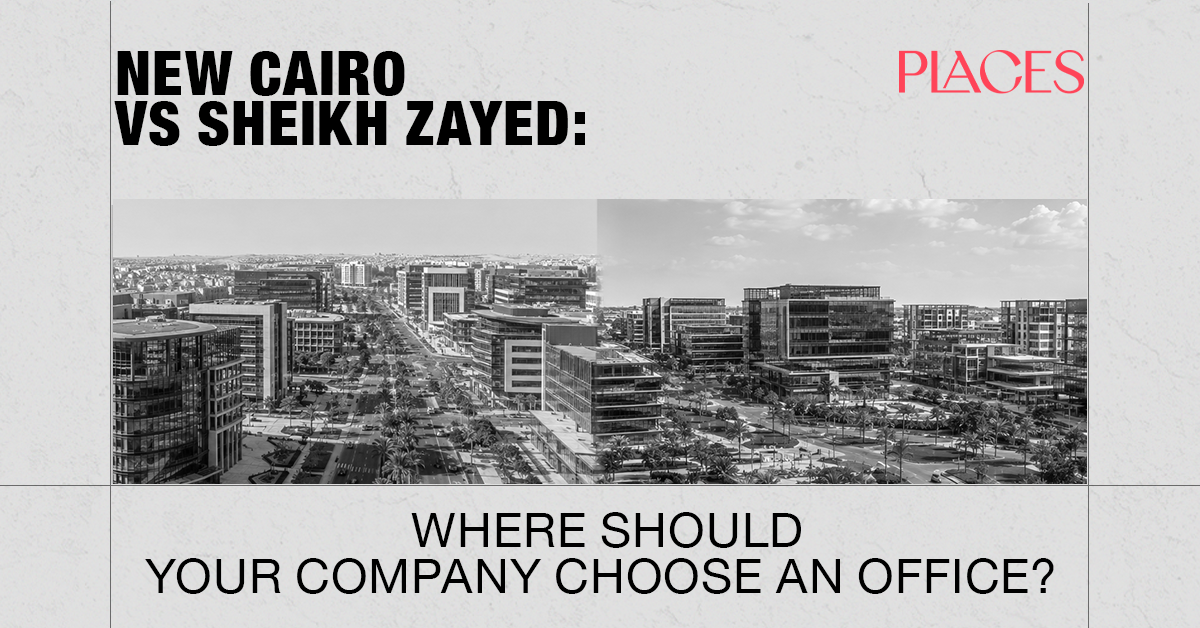
  • New Cairo vs Sheikh Zayed: Where Should Your Company Choose an Office?

    New Cairo vs Sheikh Zayed: Where Should Your Company Choose an Office?

    Choosing between New Cairo and Sheikh Zayed is not simply a real estate decision. It is an operating decision. New Cairo can be stronger for companies focused on East Cairo, the Fifth Settlement, Heliopolis, Nasr City, the New Administrative Capital corridor, or a wider New Cairo office ecosystem. Sheikh Zayed can be stronger for companies focused on West Cairo, 6th of October, Giza, Mohandessin, Dokki, and residential or commercial communities on the western side of Greater Cairo.

    The best choice depends on where your employees live, where your clients are, how often people visit the office, what image the company needs, how much flexibility the team requires, and whether the office is for lease, purchase, or long-term regional presence.

    For foreign companies, regional teams, and operators entering Egypt, this comparison is especially important. A location that looks strong on a map may not work well if the team, clients, and daily operations are moving in the opposite direction. A premium office in the wrong part of the city can create hidden costs through commute time, weak client access, parking issues, or future expansion friction.

    The right question is not: “Is New Cairo better than Sheikh Zayed?” The better question is: “Which location makes the business easier to operate, easier to visit, easier to staff, and easier to grow?”

    This guide compares New Cairo and Sheikh Zayed from a business perspective: East Cairo vs West Cairo, client access, employee commute, company image, office cost, business type, leasing or buying strategy, and future flexibility.

    Why this comparison matters for companies

    New Cairo and Sheikh Zayed are two of Greater Cairo’s most important office and business destinations outside the older central districts. Both areas offer modern office options, residential depth, services, road access, and strong business appeal. But they serve different geographic and operational needs.

    New Cairo is more naturally connected to East Cairo. It can be practical for companies working with clients, employees, or partners in the Fifth Settlement, Heliopolis, Nasr City, Madinaty, El Rehab, Cairo Festival City, and the New Administrative Capital corridor. It also offers a broad office market with North 90 Street, South 90 Street, business parks, mixed-use projects, serviced offices, and administrative buildings.

    Sheikh Zayed is more naturally connected to West Cairo. It can be practical for companies working with clients, employees, or partners in Sheikh Zayed, 6th of October, Giza, Mohandessin, Dokki, Smart Village surroundings, and western residential communities. It can also suit businesses that serve West Cairo households, companies, industrial zones, or professional networks.

    The mistake is to compare the two areas as if they serve the same city map. They do not. New Cairo and Sheikh Zayed are both strong, but each one becomes stronger or weaker depending on the company’s client base, employee map, and operating model.

    New Cairo: stronger for East Cairo and a broader office ecosystem

    New Cairo is often the stronger choice when the company’s activity is concentrated in East Cairo. If clients, employees, meetings, or future growth are linked to the Fifth Settlement, Heliopolis, Nasr City, El Rehab, Madinaty, Cairo Festival City, or the New Administrative Capital corridor, New Cairo can reduce operational friction.

    It also offers a broad range of office environments. North 90 Street can suit client-facing companies that need visibility and a recognized address. South 90 Street can suit companies looking for newer projects and a more balanced operating environment. Business parks can suit companies that need corporate image and professional building management. Serviced offices can suit market-entry teams or companies that need flexibility. Mixed-use districts can suit companies that benefit from nearby services and visitor activity.

    For foreign or regional companies, New Cairo may be a practical first base because it offers many ways to enter the market. A company can start with a serviced office, move to a traditional leased office, or later buy an office if the location proves strategically useful.

    However, New Cairo is not automatically right. If the company’s clients and employees are mostly in West Cairo, the distance can become a daily cost. A strong office market does not compensate for a poor fit with the company’s actual geography.

    Sheikh Zayed: stronger for West Cairo and western business networks

    Sheikh Zayed is often the stronger choice when the company’s activity is concentrated in West Cairo. If employees, clients, or partners are based in Sheikh Zayed, 6th of October, Giza, Mohandessin, Dokki, or western residential communities, Sheikh Zayed may be more practical than New Cairo.

    For companies serving households, professionals, schools, medical communities, residential compounds, developers, industrial zones, or business networks in West Cairo, Sheikh Zayed can reduce travel time and improve client convenience. It can also support companies that want a modern office environment without requiring employees or clients to cross the city regularly.

    Sheikh Zayed may be suitable for professional services, real estate companies, educational or training businesses, medical-related administrative uses, family-focused service providers, design and architecture firms, companies linked to 6th of October, and teams that rely on West Cairo talent.

    But Sheikh Zayed is not automatically better for companies that simply want a “modern office.” If the business is connected to East Cairo, the New Administrative Capital corridor, or clients in New Cairo, choosing Sheikh Zayed may create unnecessary distance. The location should serve the company’s operating map, not just its preference for the area.

    East Cairo vs West Cairo: follow the business map

    The first layer of the decision is geography. A company should map where its employees live, where its clients are, where meetings happen, and where growth is expected. This simple exercise often makes the decision clearer.

    If the company’s business activity is mostly east of the city, New Cairo will usually be more practical. If the company’s business activity is mostly west of the city, Sheikh Zayed will usually be more practical. If the company serves all of Cairo, the decision should depend on whether the office is mainly for clients, employees, management, operations, or brand presence.

    For example, a regional consulting team serving clients in New Cairo, Heliopolis, and the New Administrative Capital corridor may benefit from a New Cairo office. A company working with clients in Sheikh Zayed, 6th of October, and Giza may benefit from a Sheikh Zayed office. A hybrid team with few visitors may choose based on where its core employees live rather than where the market looks more prestigious.

    The office should not fight the company’s movement pattern. When the office is placed against the natural direction of the business, the company pays hidden costs in commute time, meeting friction, delayed arrivals, weaker attendance, and lower convenience.

    Employee commute: the hidden cost of the wrong location

    Many companies choose offices based on clients and image, then later discover that the team is paying the price every day. Commute time affects productivity, punctuality, hiring, retention, office attendance, and employee satisfaction.

    If most of the team lives in East Cairo, New Cairo may make attendance easier. If most of the team lives in West Cairo, Sheikh Zayed may be more sustainable. If the team is split, the company should study the attendance model. Does the team come every day? Are there fixed office days? Is the office mainly used for meetings? Can hybrid work reduce commute pressure?

    For foreign and regional companies, this is especially important because local hiring may depend on where the office is located. A company may attract different talent pools depending on whether it chooses East Cairo or West Cairo. The office location can influence not only commute time but also recruitment strategy.

    A location that looks premium but weakens employee attendance may not be a good business decision. The best office location is not the one that impresses management once. It is the one the team can use consistently.

    Client access: choose the side your clients actually use

    If clients visit regularly, client access should be central to the decision. A company should ask where clients are coming from, how often they visit, how easy the address is to explain, whether parking is available, and what impression the building gives before the meeting begins.

    New Cairo may be stronger if clients are based in the Fifth Settlement, Heliopolis, Nasr City, El Rehab, Madinaty, Cairo Festival City, or the New Administrative Capital corridor. Sheikh Zayed may be stronger if clients are based in Sheikh Zayed, 6th of October, Giza, Mohandessin, Dokki, or West Cairo residential communities.

    But client access is not only about distance. A closer office in a weak building may create a poor experience. A slightly farther office in a well-managed building with clear access and parking may feel more professional.

    The visitor journey matters: road access, entrance, signage, security, elevators, common areas, parking, and reception. If the office is client-facing, the building becomes part of the company’s service experience.

    Company image: what does the office need to communicate?

    Some companies need their office to communicate credibility, stability, and professionalism. Consulting firms, legal offices, financial advisory companies, engineering firms, regional offices, training providers, and companies receiving senior clients often need a strong office experience.

    New Cairo can support a modern and active business image, especially in recognized office locations, business parks, and well-managed mixed-use projects. Sheikh Zayed can support a polished West Cairo presence, particularly for businesses serving western residential and commercial communities.

    However, image is not only about the area name. A weak building in a famous area can damage perception. A well-managed building in a slightly less famous location can create a stronger experience. Clients notice the entrance, parking, elevators, security, and meeting environment before they judge the office size.

    A company should choose the image it actually needs. If the office is part of the sales and trust process, the quality of the location and building matters. If the office is mainly for internal work, image may be less important than comfort, layout, and cost control.

    Office cost: compare total value, not only rent or purchase price

    New Cairo and Sheikh Zayed should not be compared by headline rent or purchase price alone. The real cost includes rent or acquisition price, maintenance, fit-out, furniture, utilities, internet, parking, moving cost, time to operate, lease escalation, and exit risk.

    A lower rent may not be better if the office requires major fit-out, has weak parking, or sits in a building with poor management. A higher rent may be justified if the office is ready, well located for the team, strong for clients, and reduces operational friction.

    The same applies to buying. A cheaper office may not be a better investment if resale demand is weak, the building is poorly managed, or the layout is inefficient. A more expensive office may hold value better if it serves a clear tenant profile and offers stronger building quality.

    The correct comparison is not “New Cairo or Sheikh Zayed, which is cheaper?” It is “Which option delivers better operational value for our specific company?”

    Business type: different companies need different locations

    A consulting firm that serves East Cairo or regional clients may be better positioned in New Cairo, especially if client meetings are frequent. A consulting firm serving West Cairo executives, families, or companies may be better positioned in Sheikh Zayed.

    A technology company may not need maximum visibility. It may choose based on employee commute, office layout, internet readiness, parking, and flexibility. If the team is in East Cairo, New Cairo may be more practical. If the team is in West Cairo, Sheikh Zayed may be better.

    A training provider should prioritize visitor access, parking, room planning, permitted use, and nearby services. The right area depends on where trainees or clients come from.

    A medical-related administrative office should review permitted activity, building rules, visitor experience, elevators, and parking carefully in either location.

    A regional representative office may start with flexibility. It may choose a serviced office or ready-to-move office in the area closest to its first wave of clients and employees, then reassess later.

    A back-office or support team should avoid overpaying for visibility it does not use. It should focus on cost, access, layout, employee comfort, and lease flexibility.

    Leasing strategy: when flexibility matters

    Leasing is often the safer starting point for companies that are still testing Egypt, changing team size, or unsure about long-term location needs. This is especially true for foreign or regional companies entering the market.

    A company may lease in New Cairo if it wants to test East Cairo demand, client movement, employee access, and the New Administrative Capital corridor. It may lease in Sheikh Zayed if it wants to test West Cairo clients, 6th of October links, or a western employee base.

    The lease should be reviewed carefully. Companies should check rent, maintenance, annual escalation, deposit, fit-out responsibility, rent-free period, parking terms, activity permissions, repair obligations, and exit conditions.

    A flexible lease can protect the company from choosing the wrong side of the city too early. If the business map changes, the company can relocate without being tied to an owned asset.

    Buying strategy: when ownership makes sense

    Buying an office can make sense when the company is stable, knows its location needs, has long-term plans in the area, and can commit capital without pressuring operations. But buying too early can reduce flexibility.

    A company should buy in New Cairo if it has a clear long-term need for East Cairo, wants exposure to a broader office ecosystem, and finds a building and unit that support both use and future exit. It should buy in Sheikh Zayed if West Cairo is clearly the company’s operating base and the office has strong long-term usability or rental demand.

    For investors, the question is different. Who will rent the office? What type of tenant does the area attract? Is the unit size practical? Is parking sufficient? Is the building well managed? What is the likely vacancy period? Can the unit be resold later?

    Ownership should not be based on area reputation only. It should be based on operating fit, tenant demand, building quality, total cost, and exit logic.

    Expansion: which area gives your company room to grow?

    Companies should not choose an office only for today. The location should support the next stage. Can the company expand in the same building, project, or area? Are there similar units nearby? Can the lease adapt? Will the team still fit in two or three years?

    New Cairo offers a broad range of office options, which may help companies that expect growth or want to move between different office types over time. A team can start in a serviced office, move to a leased administrative office, then later consider a business park or owned headquarters.

    Sheikh Zayed can also support growth, especially for companies connected to West Cairo. The key is whether the area has enough suitable supply for the company’s expected size and image.

    Expansion is not only about square meters. It is about continuity. If a company grows, can it remain near clients and employees without starting the location decision again?

    Parking and access: decisive in both locations

    Parking and access are decisive in both New Cairo and Sheikh Zayed. A strong address becomes weaker if clients struggle to park or employees face daily arrival stress.

    Companies should test access during working hours. Can employees reach the location from their residential areas? Can clients find the building easily? Are there multiple routes? Is parking allocated? Is visitor parking available? Are garage entrances clear? Does the building manage traffic well?

    For client-facing companies, parking affects first impressions. For employee-heavy teams, parking affects attendance and comfort. For investors, parking affects tenant demand and resale value.

    A practical office in a well-managed building may outperform a more prestigious address with daily access problems. The right location should work in real use, not only on a map.

    Common mistakes when choosing between New Cairo and Sheikh Zayed

    The first mistake is choosing based on personal preference. Management may prefer one area, but the business may operate in another direction. The company should follow clients, employees, and growth plans.

    The second mistake is comparing the areas by price only. Total cost includes commute time, fit-out, maintenance, parking, lease terms, and future flexibility.

    The third mistake is ignoring employees. A location that impresses clients but exhausts the team can weaken operations.

    The fourth mistake is ignoring clients. A convenient office for the team may still be poor if clients cannot visit easily.

    The fifth mistake is choosing a strong area but a weak building. The building experience can either support or damage the company’s image.

    The sixth mistake is buying before testing. For companies unsure about the right side of Cairo, leasing first may be safer.

    The seventh mistake is not planning for expansion. The office should support the company’s next stage, not only its current headcount.

    How Places helps companies choose between New Cairo and Sheikh Zayed

    At Places, we do not start with the question: “Which area is better?” We start with the business. We look at the company’s operating model, employee map, client locations, meeting flow, budget, lease or purchase strategy, image needs, parking requirements, and growth plans.

    For one company, New Cairo may be the right choice because East Cairo clients, employees, and office options are more relevant. For another, Sheikh Zayed may be stronger because the business is built around West Cairo. For a foreign company entering Egypt, the right answer may be a flexible office first, not immediate ownership. For an investor, the right choice depends on tenant demand and exit potential.

    Our role is to help companies read beyond listings and area reputation. A good office decision should make the business easier to operate, easier to visit, easier to staff, and easier to grow.

    The goal is not to prove that New Cairo or Sheikh Zayed is better. The goal is to identify which location is better for your company.

    Frequently asked questions about New Cairo vs Sheikh Zayed offices

    Is New Cairo better than Sheikh Zayed for offices?

    New Cairo may be better for companies focused on East Cairo, the Fifth Settlement, Heliopolis, Nasr City, and the New Administrative Capital corridor. Sheikh Zayed may be better for companies focused on West Cairo, 6th of October, Giza, and western residential communities. Neither is better for every company.

    When should a company choose New Cairo?

    A company should choose New Cairo if its clients, employees, partners, or growth plans are mainly connected to East Cairo. It is also suitable for companies that want a wider range of office options, including business parks, serviced offices, and mixed-use districts.

    When should a company choose Sheikh Zayed?

    A company should choose Sheikh Zayed if its clients, employees, or operations are mainly linked to West Cairo, 6th of October, Giza, Mohandessin, Dokki, or nearby residential and commercial communities.

    Which location is better for foreign or regional companies?

    Foreign and regional companies should choose based on their first client base, employee hiring map, meeting needs, and market-entry strategy. New Cairo may suit East Cairo and regional business activity, while Sheikh Zayed may suit West Cairo and 6th of October connections. A flexible lease is often safer at the beginning.

    Which location is better for employees?

    The better location is the one closer to the company’s actual employee base. If most employees live in East Cairo, New Cairo may be easier. If most live in West Cairo, Sheikh Zayed may be more practical.

    Which location is better for client-facing companies?

    Client-facing companies should choose the area that clients can reach more easily and that supports a professional visitor experience. Distance, parking, building quality, and address clarity are all important.

    Should a company rent or buy in New Cairo or Sheikh Zayed?

    Renting is often better when the company is still testing its location needs. Buying may make sense when the company is stable, has a clear long-term need in the area, and can own without limiting business growth or liquidity.

    Final thoughts

    New Cairo and Sheikh Zayed are both strong office locations, but they serve different business maps. New Cairo is usually stronger for companies connected to East Cairo, the Fifth Settlement, Heliopolis, Nasr City, and the New Administrative Capital corridor. Sheikh Zayed is usually stronger for companies connected to West Cairo, 6th of October, Giza, and western residential communities.

    The right choice depends on how the company works. Where do employees live? Where are clients located? How often do people visit the office? What image does the company need? Is the office for lease, purchase, or market entry? Can the company expand later? What is the total cost of choosing one side of the city over the other?

    The best office location is not the one that looks strongest on a listing. It is the one that makes daily operations easier, supports client trust, protects employee comfort, and gives the company room to grow. When the office location follows the business map, the decision becomes clearer.

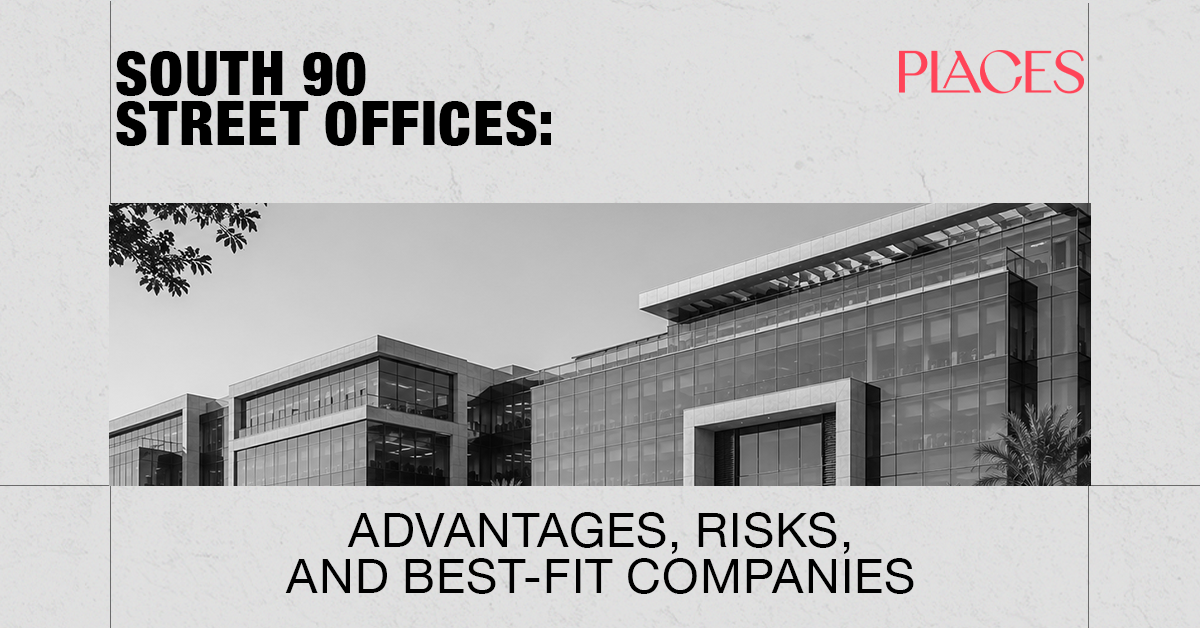
  • South 90 Street Offices: Advantages, Risks, and Best-Fit Companies

    South 90 Street Offices: Advantages, Risks, and Best-Fit Companies

    South 90 Street has become an important office location for companies considering New Cairo, especially those looking for a balance between access, newer projects, operational calm, and more measured visibility. It is often considered by businesses that want to stay within the Fifth Settlement and New Cairo office market, but do not necessarily need the highest level of street exposure associated with more visible commercial corridors.

    The main advantage of South 90 Street is that it can offer a more balanced office decision. In selected projects, companies may find newer buildings, more organized environments, practical access, and potentially better alignment between cost and daily use. For companies that do not rely heavily on walk-in visibility or constant client traffic, South 90 can be a strong alternative to more exposed locations.

    But South 90 Street is not automatically the better-value option. Some projects may still be building occupancy, surrounding services, and daily activity. A newer project can look strong in presentations but still require careful review of access, parking, building management, actual tenant mix, services, and the experience of using the office every day.

    The right question is not: “Is South 90 Street better than North 90 Street?” The better question is: “Does South 90 Street fit our company’s operating model, and is this specific project ready enough for our team, clients, and future plans?”

    This guide is written for companies, founders, operators, regional teams, and investors evaluating South 90 Street offices before leasing or buying.

    Why South 90 Street matters in New Cairo

    South 90 Street matters because it adds depth to the New Cairo office market. New Cairo is not one single office location. North 90 Street may be stronger for visibility and recognition, business parks may offer more corporate settings, serviced offices may provide flexibility, and South 90 Street can offer a different mix: newer projects, calmer surroundings in selected locations, and a potentially more practical balance for some businesses.

    For companies that want to be in New Cairo but do not need the most visible address, South 90 can be worth serious consideration. It may suit businesses that care about office quality, employee comfort, controlled access, and cost efficiency more than maximum street exposure.

    South 90 is also relevant because many companies today are not choosing offices only for prestige. They are asking more operational questions: Can the team arrive easily? Is parking manageable? Is the building well run? Are services nearby? Is the lease or purchase cost justified by daily use? Is the project active enough to support business operations?

    That is where South 90 can become attractive. It may offer a location within New Cairo while giving some companies a more balanced experience than busier, more visible corridors. But that balance depends heavily on the specific project, building, and unit.

    The main advantage: newer projects and potentially better organization

    One of South 90 Street’s strongest selling points is the presence of newer office and mixed-use projects in selected areas. For companies, newer projects may mean better planning, more modern entrances, improved common areas, stronger building systems, more efficient layouts, and a cleaner visitor experience.

    This can matter for companies that want a professional office without being in a highly congested location. A newer, well-managed project can improve employee experience, client perception, and long-term usability. It may also help companies that need a more modern work environment but do not want to pay only for visibility.

    However, “newer” does not always mean “better.” A new project still needs to prove that it works in real daily use. It should have active building management, enough occupancy, reliable elevators, clear parking rules, working services, and a tenant mix that supports the professional image of the business.

    A company should not choose South 90 because a project looks modern in photos. It should choose South 90 because the project is operationally ready, professionally managed, and aligned with how the business will use the office.

    Visibility: less exposure can be a benefit or a limitation

    Compared with more visible office corridors, South 90 Street may offer less immediate exposure in some locations. For certain companies, that is not a problem. For others, it can be a limitation.

    If the business depends on walk-in activity, frequent client visits, strong street recognition, or being immediately easy to describe to a broad customer base, then lower visibility may weaken the case for South 90. A client-facing law firm, financial advisory firm, training center, or medical-related administrative use may need to check whether the specific project is recognizable enough for its visitors.

    But if the company works mainly through scheduled meetings, referrals, online channels, business-to-business relationships, or internal operations, lower visibility may not matter much. In fact, a calmer setting can be better for teams that need focus, stability, and lower daily friction.

    Visibility should not be treated as automatically good or bad. It should be measured against the business model. If visibility creates revenue, trust, or easier client movement, it has value. If it is mostly unused, the company may be better served by a location that offers better building quality, parking, layout, or cost control.

    Access: practical, but project-dependent

    Access is one of the most important factors when evaluating South 90 Street offices. A location may look close to key roads on the map, but the real question is how employees, clients, and visitors reach the building during working hours.

    Some South 90 projects may offer smooth access and a calmer arrival experience than more congested locations. Others may require less obvious routes, weaker signage, or more explanation for first-time visitors. The difference can be significant from one project to another.

    Companies should test access from multiple directions. Can employees reach the office easily from their residential areas? Can clients find the location without confusion? Is the entrance obvious? Are there alternative routes if one road is busy? Is the project easy to explain in a message or on a call?

    For companies that rely on regular client visits, access is part of the customer experience. For internal teams, access affects punctuality, comfort, and employee satisfaction. For investors, easy access can improve tenant demand. A good South 90 office is not just near a road; it is easy to use.

    Occupancy: the key risk to review carefully

    Occupancy is one of the most important risks in South 90 Street office decisions. A project may be new, attractive, and well designed, but if it has low actual occupancy, the business environment may not feel complete yet. Services may be limited, footfall may be weak, and the project may still be waiting to develop a stronger business community.

    Low occupancy is not always a reason to reject a project. In some cases, entering early can be a good decision if the price, building quality, developer, location, and future demand are all strong. But it changes the risk profile. A company that needs immediate operations should be more cautious than an investor with a longer time horizon.

    Companies should look for signs of healthy occupancy. Are there businesses operating now? What types of tenants are present? Are common areas active during working hours? Are services open? Does the project feel like a functioning workplace or a future promise?

    The best South 90 projects are not only modern; they are active enough to support daily business use. For leasing, this affects employee and client experience. For buying, this affects future rental demand and resale logic.

    Services around the project: convenience affects daily work

    Office decisions are not made inside the unit only. Surrounding services matter. Employees need food, cafés, banking, printing, pharmacies, transportation options, and daily convenience. Clients and visitors also benefit from a location that feels practical and supported.

    South 90 Street may offer strong services in some points and less developed surroundings in others. A company should not assume that all services are already active just because the project is located in New Cairo. The practical question is what is available today, not only what is planned later.

    For companies that work long hours, host meetings, or need employees to stay on-site for most of the day, services can affect satisfaction and productivity. For training providers or client-facing companies, services around the building can also affect the visitor experience.

    If a company needs immediate usability, incomplete services may be a real problem. If the company is renting flexibly, it may tolerate some development risk. If the company is buying, the same issue becomes more important because it affects long-term value and tenant demand.

    Parking: still a decisive factor

    Parking remains a decisive factor for South 90 Street offices, just as it is across New Cairo. Even if a project is newer or calmer, companies should not assume that parking is automatically sufficient. The parking experience should be checked before leasing or buying.

    Companies should ask whether parking spaces are allocated, whether visitor parking is available, whether parking is included or charged separately, how garage access works, and whether the project can handle peak-hour demand. A company should also check if parking rules are clear and properly managed.

    For employees, parking affects daily comfort. For clients, it affects the first impression before the meeting begins. For investors, it affects the attractiveness of the unit to future tenants. A building with weak parking can lose value even if the location and unit look strong.

    A South 90 office with good access and organized parking may outperform a more visible office with daily parking stress. That is why parking should be treated as part of the office’s core value, not as a secondary feature.

    Building quality: the real test behind the project name

    A project name can create interest, but the building experience decides whether the office works. Companies should review the entrance, reception, elevators, security, common areas, maintenance, restrooms, air conditioning systems, fire safety, signage rules, and visitor management.

    This is especially important in newer projects. A building may look strong in marketing material but still need time to prove how well it is operated. The company should not evaluate only the unit. It should evaluate the full experience from arrival to daily use.

    For client-facing businesses, building quality affects trust and image. For employee-heavy companies, it affects comfort and productivity. For investors, it affects tenant demand and resale value.

    A practical way to test building quality is to walk through the project like a visitor. How easy is it to enter? Does the building feel active and managed? Are elevators reliable? Are common areas clean? Is maintenance visible? Does the tenant mix fit the company’s desired image?

    Best-fit companies for South 90 Street offices

    South 90 Street can be a good fit for companies that want a New Cairo location without depending mainly on high street visibility. It may suit businesses that operate through scheduled meetings, internal teams, digital channels, or business-to-business relationships.

    Technology companies may benefit from South 90 if the building offers efficient layouts, good infrastructure, natural light, parking, and a calmer environment. Professional services firms may also find value if they receive clients by appointment rather than relying on frequent walk-in traffic.

    Back-office teams, administrative departments, support functions, and hybrid teams may find South 90 suitable because their main priorities are cost efficiency, employee access, layout, and stability rather than maximum exposure.

    Regional teams entering Egypt may also consider South 90 if they want a modern New Cairo base with lower friction and more balanced cost than highly visible locations. However, they should check whether the location is recognizable enough for visiting partners and clients.

    Training providers, medical-related administrative uses, and client-heavy services can still consider South 90, but they need deeper checks around visitor flow, parking, permitted activity, room layout, and project recognition.

    When South 90 may not be the right fit

    South 90 may not be the right fit if the business depends heavily on visibility, frequent client visits, or immediate address recognition. If clients must be able to identify the location instantly, a more visible corridor or business park may be more suitable.

    It may also be unsuitable if the chosen project has low occupancy, weak services, unclear access, or limited parking. A good location concept does not compensate for a project that is not ready for daily use.

    Companies with large teams should also be careful. A newer building may look attractive, but it must be able to support actual headcount: elevators, parking, restrooms, building systems, security, and nearby services must all be tested.

    For investors, South 90 may not be suitable if the unit depends too much on future demand and does not have a clear tenant profile today. The investment case should be based on realistic rental demand, not only expected area growth.

    Leasing on South 90 Street: what to check

    Leasing an office on South 90 Street can be a strong option for companies that want flexibility, a newer project environment, and a New Cairo location without making a purchase commitment. It can work well for companies testing New Cairo, growing teams, or businesses that are still clarifying their office needs.

    Before signing a lease, companies should check the rent, maintenance charges, annual escalation, security deposit, fit-out responsibility, rent-free period, parking terms, activity permissions, repair obligations, and exit conditions. A lease should not be evaluated from the monthly rent alone.

    If the office is in a newer project, it is especially important to check what is actually delivered and operational. Are elevators working fully? Are services open? Is security organized? Are common areas maintained? Is there enough activity in the project to make it comfortable for employees and clients?

    Leasing can reduce long-term risk, but only if the contract remains flexible and the office can support immediate operations.

    Buying on South 90 Street: what to check

    Buying an office on South 90 Street can make sense for companies that want a long-term New Cairo base or investors who believe in the project’s future demand. However, buying requires a deeper view than leasing because the capital commitment is larger and the exit is less flexible.

    Owner-occupiers should ask whether the office will still fit the business in several years. Is the area suitable for the team and clients? Is the unit layout flexible? Can the company grow? Is the building quality strong enough for long-term use?

    Investors should focus on tenant demand. Who is likely to rent this office? What type of company would prefer South 90? Is the unit size practical? Is the building active enough? How long might the vacancy period be? What are the maintenance and fit-out costs? Can the unit be resold if needed?

    A South 90 purchase can be attractive when the project is strong, the unit is practical, the price reflects the current risk, and the future tenant profile is clear. It becomes risky when the decision depends mainly on general expectations that the area will grow.

    South 90 vs North 90: how to compare properly

    North 90 Street is often stronger for visibility, recognition, and client-facing use. South 90 Street may be stronger for companies seeking balance, newer projects, calmer environments, or better cost-to-value alignment in selected locations.

    The comparison should not be reduced to which street is better. The right comparison is based on business use. If clients visit frequently and address recognition matters, North 90 may be stronger. If the company needs a practical New Cairo office for an internal or appointment-based business, South 90 may offer better value.

    North 90 can justify a premium when visibility creates business value. South 90 can justify consideration when the project quality, access, parking, and cost support daily operations. In both cases, the building and unit matter more than the street name.

    A company choosing between the two should visit both locations during working hours, test access, compare parking, review building quality, calculate total cost, and decide based on operating model rather than general reputation.

    Total cost: do not compare rent or price alone

    South 90 offices should be compared by total cost, not only headline rent or purchase price. The real cost includes rent or acquisition price, maintenance, fit-out, furniture, utilities, internet, parking, moving cost, setup time, lease escalation, and future exit risk.

    A newer project may require more fit-out or setup time. A ready-to-move office may cost more but reduce operational delay. A lower-priced unit may become expensive if services are incomplete or if the company needs to invest heavily before operating.

    For buyers, total cost also includes holding cost, vacancy risk, maintenance during non-use, resale timeline, and potential fit-out changes for future tenants. For tenants, total cost includes the cost of being locked into a space that may not fit if the team grows or the business model changes.

    A good South 90 decision should answer one question clearly: does this office deliver enough operational value for the full cost and risk?

    Common mistakes when choosing a South 90 office

    The first mistake is assuming that newer always means better. Newer projects can be attractive, but they must prove actual operational readiness.

    The second mistake is ignoring occupancy. A project with low business activity may not support daily office use or immediate tenant demand.

    The third mistake is comparing South 90 with North 90 based only on price. The real comparison should include visibility, access, parking, services, building quality, and company fit.

    The fourth mistake is overlooking surrounding services. Employees and clients need a practical environment, not only a good unit.

    The fifth mistake is buying based on future expectations only. Future growth can be part of the decision, but it should not replace current due diligence.

    The sixth mistake is ignoring the unit layout. A strong project with an inefficient unit can still become a weak office decision.

    How Places helps companies evaluate South 90 offices

    At Places, we do not present South 90 Street as simply a cheaper or quieter alternative to North 90. We evaluate it according to the company’s operating model and the specific project’s readiness.

    We start by understanding the business: team size, client visits, employee locations, daily operations, budget, lease or purchase strategy, fit-out needs, parking requirements, and growth plans. Then we evaluate the location, project, building, unit, occupancy, services, total cost, and exit potential.

    For one company, South 90 may be a smart and efficient choice because it offers balance, newer projects, and a calmer environment. For another, it may be too early or not visible enough. For an investor, the decision depends on tenant demand, building quality, and realistic timing.

    Our role is to help businesses see the real decision behind the listing. A South 90 office should not only look promising. It should work for the company after signing, after moving in, and later if the business needs to grow, lease, or sell.

    Frequently asked questions about South 90 Street offices

    Is South 90 Street a good office location?

    Yes, South 90 Street can be a good office location for companies seeking a New Cairo address, newer projects, and a more balanced operating environment. However, each project should be checked for occupancy, services, parking, access, and building management.

    Is South 90 Street better than North 90 Street?

    Not always. North 90 Street is usually stronger for visibility and client recognition, while South 90 Street may be better for companies looking for newer projects, calmer surroundings, or better cost-to-value balance. The right choice depends on the business model.

    What type of companies fit South 90 Street offices?

    South 90 can fit technology companies, internal teams, professional services with scheduled meetings, regional teams, back-office operations, and companies that want New Cairo access without relying mainly on street visibility.

    What are the main risks of South 90 Street offices?

    The main risks are low occupancy, incomplete surrounding services, unclear access, weak parking, uneven building management, and buying or leasing based on future expectations rather than current usability.

    Should startups consider South 90 Street?

    Startups can consider South 90 if they need a practical New Cairo office with balanced cost and flexible growth. However, they should avoid long commitments if the team size or operating model is still changing.

    Is South 90 Street suitable for investors?

    It can be suitable if the project is strong, the unit is practical, the price reflects current risk, and there is a clear tenant profile. Investors should assess vacancy risk, fit-out cost, maintenance, and resale potential.

    What should companies check before leasing or buying on South 90?

    Companies should check access, occupancy, surrounding services, parking, building quality, layout, fit-out condition, lease or purchase terms, total cost, and whether the location fits employees and clients.

    Final thoughts

    South 90 Street is not just a secondary option to North 90 Street. It has its own logic. It can work well for companies that want a New Cairo office with newer projects, balanced cost, practical access, and a calmer working environment in selected locations.

    But the decision must be made carefully. South 90’s strengths depend on the specific project, actual occupancy, surrounding services, building management, parking, unit layout, and business fit. A modern project is not enough if it is not ready for daily operations. A lower cost is not enough if the company faces hidden friction after moving in.

    For client-heavy businesses, visibility and visitor access must be tested carefully. For internal teams, employee comfort, layout, parking, and cost may matter more. For investors, tenant demand and exit potential should guide the decision.

    The best South 90 office is not simply the newest or most attractive listing. It is the office where the location, project, building, unit, and total cost support the company’s real operating model.

  • North 90 Street Offices: What Businesses Should Check Before Leasing or Buying

    North 90 Street Offices: What Businesses Should Check Before Leasing or Buying

    North 90 Street is one of the most recognized office locations in New Cairo. Its main advantage is visibility. It is easy to describe, familiar to many clients and employees, surrounded by services, and strongly associated with business activity in the Fifth Settlement. For companies that need client access, a clear address, and a visible market presence, North 90 Street can be a strong office choice.

    But North 90 is not automatically the right location for every business, and not every office near North 90 deserves a premium. A strong address can still come with traffic pressure, limited parking, uneven building quality, inefficient layouts, higher operating costs, or lease and purchase terms that do not fit the company’s stage.

    The right question is not: “Is North 90 Street a good office location?” The better question is: “Does North 90 Street support the way our company actually works, and does this specific building justify its cost?”

    This guide is written for companies, founders, regional teams, investors, and operators who are seriously considering leasing or buying an office on or around North 90 Street. It explains what to check before making a decision: visibility, access, client-facing use, traffic, parking, building quality, total cost, lease or purchase logic, and future exit potential.

    Why North 90 Street matters in New Cairo

    North 90 Street has become one of the most familiar commercial and administrative corridors in New Cairo. For many people, it is one of the easiest locations to understand when they think of the Fifth Settlement. It connects to major services, commercial activity, banks, restaurants, retail destinations, and a wide range of administrative and mixed-use buildings.

    For businesses, this familiarity can be valuable. A client may not know every project name in New Cairo, but they are more likely to understand a location described as being on or near North 90 Street. That matters for companies that receive visitors, hold meetings, conduct consultations, or depend on trust and accessibility.

    North 90 can also help companies appear more established. A recognizable address, a presentable building, and a location close to active business surroundings can support the company’s image. For some sectors, the office is not only a workplace; it is part of the sales and trust experience.

    However, North 90 is not one uniform market. There are stronger and weaker points, better and weaker buildings, more accessible and less accessible entrances, and different levels of parking, management, and tenant mix. The street name opens the conversation, but the building and unit decide whether the office actually works.

    When North 90 Street is a good fit

    North 90 Street is usually a good fit when visibility and client access create real business value. If clients visit the office regularly, a known location can reduce friction. If the company’s image matters in meetings, the right building on North 90 can support credibility. If the team needs nearby services, the area can make the workday more convenient.

    This can apply to consulting firms, law offices, financial advisory firms, training providers, real estate companies, medical-related administrative uses, recruitment firms, agencies, and other professional service businesses. These companies often benefit from a location that clients can find, remember, and trust.

    North 90 may also suit regional teams that need a recognizable New Cairo address while building their presence in Egypt. A clear and active location can help a new market-entry team host meetings and establish a stronger first impression.

    But the fit depends on usage. If the office is mainly for internal operations, and clients rarely visit, the company may not need to pay for North 90 visibility. A quieter or more cost-efficient location in New Cairo may support the team better. Visibility is valuable only when the business actually uses it.

    When North 90 Street may not be the best choice

    North 90 Street may not be the best choice if the business does not need a visible, client-facing address. Some companies work mainly with remote teams, internal operations, scheduled online meetings, or back-office functions. For these businesses, daily efficiency may matter more than street recognition.

    It may also be less suitable if most employees live far from East Cairo. A strong location for clients can still become difficult for employees if the commute is consistently tiring. The office should support the people who use it every day, not only the people who visit occasionally.

    North 90 may also create cost pressure. A company may pay more for a location premium, then discover that the building is not well managed, parking is limited, elevators are weak, or the layout is inefficient. In that case, the company is paying for the address without receiving enough operational value.

    The location may also be unsuitable if the business is still unstable in size. If the team may double within a year, or if the company is unsure whether it needs a physical office at all, a high-commitment lease or purchase on North 90 may reduce flexibility too early.

    Visibility: valuable only when it supports the business

    Visibility is one of North 90’s strongest advantages. A visible office can help with client confidence, visitor convenience, and brand perception. For some companies, the office address works as part of the business development process. It tells clients that the company is accessible and professionally present.

    But visibility is not the same as value. A visible address is valuable when clients visit, when the company’s reputation is supported by the office experience, and when the building itself matches the company’s image. Visibility becomes weak if the client arrives at a poor entrance, struggles to park, waits too long for elevators, or finds the building poorly maintained.

    Before paying a premium for visibility, the company should ask: How often do clients visit? Does the office location influence trust? Will the address help sales, recruitment, partnerships, or investor meetings? Does the building experience support the visibility, or does it undermine it?

    A company should not choose North 90 only because it sounds strong. It should choose North 90 because the visibility directly supports how the business operates.

    Access: test the route, not only the map

    Access is one of the most important factors when evaluating offices on North 90 Street. A location may look central on the map, but the real test is how people reach it during working hours. Road access, entrance points, turning options, nearby congestion, and visitor familiarity all matter.

    Companies should test the route from the perspective of both employees and clients. Can a first-time visitor find the building easily? Is the address simple to explain? Are there multiple access routes? Is the building entrance visible? Does traffic around the building create delays during peak hours?

    The answer may differ from one building to another. Two offices can both be described as “near North 90,” but one may be easy to access and another may be frustrating because of entry points, parking pressure, or surrounding traffic.

    A serious office decision should include at least one visit during realistic working hours. Visiting at a quiet time can create a false impression. The office should be tested when people actually move, park, enter, and leave.

    Traffic pressure: the trade-off behind activity

    North 90’s activity is part of its appeal, but it can also become a challenge. More movement usually means more visibility, services, and client familiarity. It can also mean congestion, slower access, parking pressure, and more friction around building entrances.

    For companies that depend on client visits, this trade-off may be acceptable if the building handles visitors well. For internal teams, the same traffic pressure may become unnecessary. The company must decide whether the benefits of activity outweigh the daily cost of movement.

    Traffic pressure should not be judged only by personal preference. It should be judged by the company’s operating model. A training business with many visitors may need strong access and organized parking. A consulting firm with scheduled meetings may accept some traffic if the address helps credibility. A back-office team may prefer a calmer location with easier daily movement.

    The mistake is to treat activity as automatically positive. Activity is useful when it brings clients, services, and recognition. It becomes a problem when it reduces comfort and productivity.

    Parking: a decisive factor, not a minor detail

    Parking can make or break an office decision on North 90 Street. For client-facing businesses, weak parking can damage the visitor experience before the meeting starts. For employee-heavy companies, daily parking stress can affect punctuality, morale, and office attendance. For investors, parking can affect tenant demand.

    Companies should ask very specific questions before leasing or buying. Are there allocated parking spaces? Are visitor spaces available? Is parking included or charged separately? Is access to the garage easy? Are there enough spaces during peak hours? How does the building manage visitor flow? Is street parking realistic or unreliable?

    Parking should also be assessed based on the type of business. A firm that receives one or two scheduled visitors per day has different needs from a training provider, clinic-like administrative use, or company with a large team attending daily.

    A beautiful office with poor parking may become difficult to use. A slightly less visible office with better parking and smoother access may perform better in daily operations. On North 90, parking is not an accessory. It is part of the office’s real value.

    Building quality: the address is not enough

    The building matters as much as the location. A company does not operate from the street name; it operates from the building. Entrances, elevators, security, maintenance, reception, common areas, restrooms, fire safety, air conditioning systems, visitor management, and tenant mix all shape the office experience.

    A strong North 90 address can be weakened by a poorly managed building. Clients notice the entrance before they see the office. Employees experience elevators, corridors, maintenance, and facilities every day. Future tenants or buyers will also evaluate the building before valuing the unit.

    Companies should walk through the building as if they were clients. Does the entrance feel professional? Is security organized? Are elevators sufficient? Are common areas clean? Is maintenance visible? Are signs and access rules clear? Do the other tenants fit the company’s image?

    For buyers, building quality is even more important. When buying, the company or investor is not only choosing a unit; they are taking long-term exposure to the building’s management and reputation.

    Unit layout: usable space matters more than advertised space

    An office can have a strong address and still be inefficient. Columns, deep layouts, poor lighting, wasted corridors, awkward corners, or limited flexibility can reduce the real value of the space. The advertised area does not always reflect how much space the company can use effectively.

    Before leasing or buying, the company should test a real layout. Where will the team sit? Where will meetings happen? Is there space for reception? Can private offices and open work areas fit without waste? Is there a place for storage, pantry, or support functions? Can the unit adapt if the team grows?

    For investors, layout is also important. A practical unit is easier to lease and resell than a unit that only works for a very specific type of user. A flexible layout protects future marketability.

    A smaller office with an efficient layout may be more valuable than a larger office with wasted space. The real question is not only how many square meters the unit has, but how many of them support business use.

    Fit-out condition: ready now or customizable later?

    The condition of the office changes the decision. A ready-to-move office can save time and reduce uncertainty, especially for companies that need to operate quickly. A core and shell office can allow customization, but it requires fit-out budget, contractors, approvals, time, and management effort.

    Companies should not assume that a lower purchase or rent price means better value if the office needs significant work. Fit-out cost can change the entire economics of the decision. Flooring, ceilings, lighting, partitions, air conditioning, electrical capacity, internet points, furniture, branding, and meeting room setup can all add cost and delay.

    A ready-to-move office should still be inspected carefully. The finishing may look good but be unsuitable for the company’s workflow. Air conditioning, power points, lighting, meeting room sizes, and acoustic quality should be checked.

    The right choice depends on the company’s timeline and use. If speed matters, ready-to-move may be better. If long-term customization matters, core and shell may be suitable. If the office is for investment, the owner should decide whether the target tenant expects a finished or customizable unit.

    Leasing on North 90 Street: what to check

    Leasing can be a smart option for companies that want North 90 visibility without committing capital to ownership. It is useful when the company is testing New Cairo, entering the market, changing team size, or unsure about its long-term space needs.

    But a lease decision should be reviewed carefully. The headline rent is only one part of the cost. Companies should check maintenance charges, annual escalation, security deposit, fit-out responsibility, rent-free period, parking terms, allowed activity, signage rules, repair obligations, and exit conditions.

    A lower rent may not be better if the lease terms are rigid or the office requires expensive setup. A higher rent may be justified if the space is ready, the building is well managed, and the contract gives enough clarity.

    For companies still testing the area, flexibility is important. A strong address is useful, but not if the company becomes locked into a space that no longer fits after a year.

    Buying on North 90 Street: what to check

    Buying an office on North 90 Street can be attractive for companies seeking a permanent base or investors seeking rental demand in a recognizable location. But buying requires deeper analysis than leasing because the exit is harder and the capital commitment is larger.

    For owner-occupiers, the office must support long-term business use. The company should consider team growth, client access, parking, layout flexibility, building quality, and whether the location will still make sense in several years.

    For investors, the question is tenant demand. Who will rent this unit? What type of company needs this location? Is the unit size practical? Is the building attractive to tenants? What is the expected vacancy period? What are the maintenance and fit-out costs? Can the unit be resold if needed?

    A recognizable location can help liquidity, but it does not guarantee it. A poorly selected unit, weak building, overpriced purchase, or limited parking can reduce the investment’s performance even on a strong street.

    Client-facing companies: when North 90 can be worth the premium

    North 90 is often strongest for client-facing companies. If clients visit the office regularly, the location can support trust, convenience, and brand perception. A clear address can reduce friction, especially for clients who are not familiar with every project in New Cairo.

    Professional services, legal offices, consulting firms, financial advisory firms, training businesses, and certain medical-related administrative uses may benefit from this. The office becomes part of the client journey.

    But the premium is justified only when the full experience works. The client should be able to find the building, park, enter easily, feel comfortable in the common areas, and arrive at a professional office environment. If any of these elements fail, the visibility advantage becomes weaker.

    For client-facing use, companies should evaluate the visitor journey from the road to the meeting room. North 90 can be powerful, but only when the building and unit support the promise of the address.

    Internal teams: when another location may be better

    For internal teams, North 90 may be less necessary. A company that does not host many visitors may not need to pay a premium for visibility. It may benefit more from efficient layout, parking, quiet surroundings, better lease terms, or lower total cost in another part of New Cairo.

    Technology teams, operations teams, administrative back offices, and hybrid teams should evaluate whether North 90 visibility is useful or simply expensive. If the main users are employees, then employee commute, comfort, layout, services, and cost may matter more than client recognition.

    This does not mean internal teams should avoid North 90. It means they should choose it only if the building, access, and cost still make sense without depending on visibility as the main justification.

    Total cost: compare the real commitment

    The true cost of a North 90 office includes more than rent or purchase price. It includes maintenance, fit-out, furniture, air conditioning, utilities, internet, parking, moving costs, setup time, lease escalation, taxes or transaction costs where applicable, and future exit risk.

    A company should compare options based on total first-year cost for leasing, or total cost to operational readiness for buying. This reveals whether a cheaper office is actually cheaper, and whether a more expensive one delivers enough value.

    A high-visibility location may be worth the premium when it improves client access, supports brand perception, reduces friction, and remains liquid. It may not be worth it when the company does not use the visibility or when hidden costs reduce the value.

    North 90 should be evaluated as a full business commitment, not only as a rent line or purchase price.

    Common mistakes when choosing a North 90 office

    The first mistake is choosing the location because it sounds strong. North 90 is recognized, but the specific building and unit still decide whether the office works.

    The second mistake is ignoring parking. In a visible and active location, parking can affect clients, employees, and future tenant demand.

    The third mistake is visiting at the wrong time. A quiet visit can hide real access and traffic pressure. The location should be tested during working hours.

    The fourth mistake is focusing only on the unit interior. A beautiful office inside a weak building can still damage the company’s image and daily operations.

    The fifth mistake is comparing price without total cost. Rent or purchase price alone does not include maintenance, fit-out, time, parking, and exit risk.

    The sixth mistake is not defining the use case. A client-facing firm, internal team, investor, and regional office should not evaluate North 90 with the same criteria.

    How Places helps businesses evaluate North 90 offices

    At Places, we do not treat North 90 Street as automatically suitable or automatically overpriced. We evaluate it according to the business case. For some companies, it is the right decision because visibility, client access, and a recognized address create real value. For others, it may be more than the business needs.

    We start with the company’s operating model: team size, client visits, employee commute, meeting needs, budget, lease or purchase strategy, parking requirements, fit-out condition, and growth expectations. Then we evaluate the location, building, unit, total cost, and future flexibility together.

    For one company, the right answer may be a client-facing office on North 90. For another, a better-managed building on South 90 or a business park may offer stronger value. For an investor, the right unit may be the one with the clearest tenant profile, not simply the most visible address.

    Our role is to help businesses look beyond the listing and understand whether the office will still make sense after signing, after moving in, and later if the company needs to expand, lease, or sell.

    Frequently asked questions about North 90 Street offices

    Is North 90 Street a good office location?

    Yes, North 90 Street can be a strong office location for companies that need visibility, client access, and a recognized New Cairo address. However, the building quality, parking, access, layout, and total cost must be reviewed before leasing or buying.

    Is North 90 Street better than South 90 Street?

    Not always. North 90 Street is often stronger for visibility and client recognition, while South 90 Street may offer newer projects, calmer surroundings, or better value in some cases. The right choice depends on the company’s operating model.

    What should companies check before leasing an office on North 90?

    Companies should check access, parking, building quality, maintenance, lease terms, fit-out condition, allowed activity, annual escalation, and whether the location supports their client and employee needs.

    What should buyers check before purchasing an office on North 90?

    Buyers should check title and legal status, building quality, parking, unit layout, fit-out condition, maintenance fees, tenant demand, resale potential, and whether the price reflects real market value rather than location reputation only.

    Is North 90 Street suitable for startups?

    It can be suitable for startups that receive clients, need credibility, or want a strong address. However, startups should be careful with cost, lease flexibility, and fit-out commitments. A serviced office or more flexible location may be better in early stages.

    Is North 90 Street suitable for investors?

    It can be suitable if the unit is practical, well located, in a strong building, and priced realistically. Investors should focus on tenant demand, parking, building management, vacancy risk, maintenance, and resale logic.

    Does parking matter for North 90 offices?

    Yes. Parking is one of the most important factors for North 90 offices. It affects client experience, employee comfort, rental demand, and future resale value.

    Final thoughts

    North 90 Street is one of New Cairo’s most recognizable office locations, but recognition alone is not enough. The location can be powerful for companies that need visibility, client access, and a professional address. It can also be unnecessary or expensive for businesses that mainly need internal efficiency, quiet operations, or lower total cost.

    Before leasing or buying, companies should evaluate the real operating experience: access, traffic, parking, building quality, layout, fit-out condition, total cost, lease or purchase terms, and future flexibility. The best North 90 office is not simply the one with the strongest address. It is the one where the address, building, unit, and cost all support the business case.

    A good office decision should make work easier, improve client experience, protect the company’s flexibility, and remain understandable to the market if the business needs to grow, lease, or sell later. When North 90 does that, it can be a strong choice. When it does not, a less famous location may create better business value.

  • Best Office Locations in New Cairo: A Practical Guide for Companies

    Best Office Locations in New Cairo: A Practical Guide for Companies

    Choosing the best office location in New Cairo is not about finding the most famous street, the newest project, or the most attractive listing photos. The better answer is more practical: North 90 Street can suit client-facing companies that need visibility and a recognized address; South 90 Street can suit companies looking for a more balanced mix of access, newer projects, and operational calm; business parks can suit companies that care about image, building management, and long-term consistency; serviced offices can suit smaller teams, market-entry teams, and companies that need flexibility; and mixed-use districts can work well when nearby services and visitor access are part of the business need.

    But none of these options is automatically right. A consulting firm, a technology company, a regional representative office, a training provider, a medical operator, and a back-office team do not need the same location, building, layout, parking setup, lease structure, or level of visibility. The right office location is the one that supports the way the company actually operates.

    New Cairo has become one of Greater Cairo’s most important office destinations because it combines modern office supply, residential demand, road connectivity, business parks, mixed-use projects, and access to East Cairo and the New Administrative Capital corridor. But this strength also makes the decision harder. New Cairo is not one single office market. A unit on North 90 Street, an office in a corporate business park, a serviced workspace, and a space inside a mixed-use development can all behave very differently in daily use.

    This guide is designed for companies, founders, regional teams, and operators who want to choose an office location in New Cairo with a business-first lens, not only a real estate lens.

    Why New Cairo is a strong office destination

    New Cairo has become a preferred office location for many companies because it offers a combination that older central districts may not always provide: newer buildings, stronger residential surroundings, better-planned developments in selected areas, access to East Cairo, and a growing concentration of commercial and administrative projects.

    For companies serving the Fifth Settlement, Cairo Festival City, Heliopolis, Nasr City, New Cairo compounds, the New Administrative Capital corridor, or wider East Cairo, the area can be operationally practical. It allows companies to stay close to clients, employees, schools, residential communities, services, and major road networks.

    For regional or international teams entering Egypt, New Cairo can also be a practical first base. It offers a professional address without requiring immediate commitment to a large owned headquarters. A company can start with a serviced office, move into a traditional leased office, or later consider buying a permanent office if the location proves operationally strong.

    However, New Cairo’s popularity should not be confused with automatic suitability. A strong market can still contain weak individual decisions. Some offices are in good locations but poor buildings. Some buildings look modern but have weak parking or inefficient layouts. Some projects have strong branding but limited actual occupancy. The question is not simply: “Is New Cairo a good office market?” The better question is: “Which part of New Cairo fits our company’s operating model?”

    Start with the operating model, not the listing photos

    Many office searches begin with a simple request: “We need an office in New Cairo.” That is not enough. The same location can work very well for one company and fail for another because the companies use office space differently.

    Before comparing locations, define how the office will be used. How many people will come every day? Will the team work full-time from the office, or will the company use a hybrid model? Will clients visit regularly? Do you need a reception area, meeting rooms, private offices, open workstations, storage, a pantry, training rooms, or executive space? Does the company need a visible address, or is the office mainly for internal work?

    A consulting firm may need visibility, meeting rooms, parking, and a presentable entrance. A technology company may care more about layout flexibility, internet infrastructure, employee comfort, and access from residential areas. A regional team may need a ready-to-move setup with minimal friction. A training provider may need visitor flow, sound control, larger rooms, and easy access. A back-office operation may prioritize cost, layout efficiency, and daily employee commute over prestige.

    When the operating model is clear, the search becomes sharper. The company is no longer looking for “any office in New Cairo.” It is looking for a location that supports the way the business works.

    North 90 Street: visibility, recognition, and client access

    North 90 Street is one of the most recognized office and commercial locations in New Cairo. Its strength is visibility. It is easy to describe, familiar to many clients and employees, and surrounded by services, banks, restaurants, retail activity, and administrative buildings. For client-facing companies, this recognition can be valuable.

    North 90 Street can work well for professional services, consulting firms, law offices, financial advisory firms, training providers, medical-related administrative uses, and companies that host regular meetings. A clear address can reduce friction for visitors and support the company’s image.

    But North 90 Street is not always the best choice. Some parts may come with traffic pressure, higher rent or purchase prices, limited parking, or uneven building quality. Being “on North 90” does not automatically mean the office is operationally strong. A weak building in a famous location can still create daily problems.

    Companies considering North 90 Street should ask practical questions. Do we really need visibility? Will clients visit often enough to justify the premium? Is the building entrance presentable? Are elevators, security, parking, and maintenance reliable? Can employees reach the location without daily frustration? If the answer is yes, North 90 can be a strong choice. If not, the company may be paying for visibility it does not actually use.

    South 90 Street: balance, newer projects, and operational calm

    South 90 Street offers a different logic. It may appeal to companies looking for a balance between access, newer projects, and a calmer working environment in selected locations. It can suit companies that want to remain within New Cairo but do not necessarily need the highest level of street visibility or traffic exposure.

    South 90 Street can be suitable for technology companies, internal teams, professional services with scheduled meetings, companies looking for larger or more efficient spaces, and teams that value a more controlled daily office experience. Some projects may offer a better sense of organization, newer buildings, or more balanced costs compared with highly visible locations.

    The risk is that not every project is equally mature. A newer project may look good in brochures but still require careful checks around actual occupancy, surrounding services, access, parking, building management, and daily activity. A quiet location can be a positive sign of operational comfort, or it can be a sign that the project has not yet reached enough business activity.

    The key is to evaluate the real building, not only the street name. Companies should visit during working hours, check occupancy, test access, review services around the project, and understand whether the location works today or depends heavily on future growth.

    Business parks: stronger management and corporate image

    Business parks and organized business districts can be attractive for companies that care about image, building management, visitor experience, and long-term operational consistency. Examples may include Cairo Business Park, Cairo Festival City, Mivida Business Park, Hyde Park Business District, District 5, and similar destinations.

    The main value of a business park is that it usually offers more than a unit. It offers a managed environment: organized entrances, stronger common areas, better visitor experience, more coherent tenant mix, security, services, and a more corporate setting. For companies that regularly receive clients, partners, investors, or regional teams, this can matter.

    Business parks can be suitable for established companies, regional offices, consulting firms, corporate branches, professional services, and companies that see the office as part of their brand. They can also be useful for teams that want a stable long-term base rather than a short-term practical office.

    The trade-off is cost and commitment. Business parks may have higher rents, higher purchase prices, stricter management rules, more defined fit-out requirements, or less flexibility than smaller administrative buildings. For some companies, that premium is justified. For others, it may be more than the business needs.

    The decision should be based on whether the company benefits from the corporate environment. If clients, employees, and brand perception will all benefit, a business park may be worth the premium. If the office is mainly for internal operations, a more practical building may deliver better value.

    Serviced offices and flexible workspaces: speed and flexibility

    Serviced offices can be a smart option for companies that need speed, flexibility, and low setup effort. They are especially relevant for startups, small teams, project-based teams, foreign companies entering Egypt, regional representative offices, or companies that are not yet ready to commit to a long lease or full fit-out.

    The advantage is simplicity. A serviced office may include furniture, reception, internet, meeting rooms, cleaning, shared amenities, and shorter lease terms. This allows a company to start operating quickly without spending months on fit-out and setup.

    But serviced offices are not always cheaper. They may have a higher cost per seat or per square meter. They also give the company less control over branding, privacy, layout, visitor experience, and long-term identity. For short-term needs, this trade-off may be acceptable. For a growing company that needs a stronger independent presence, a traditional leased office may become more suitable later.

    A good strategy for some companies is to begin with a serviced office, learn the market, test team size and client flow, then move into a traditional office once the operating model is clearer.

    Mixed-use districts: services, access, and daily convenience

    Mixed-use districts combine office, retail, food and beverage, services, and sometimes residential or hospitality elements. These locations can be useful for companies that benefit from nearby amenities and visitor activity. They may suit training companies, service businesses, clinics or medical-related administrative uses, consulting offices, and companies that want employees and clients to have easy access to daily services.

    The advantage is convenience. Employees can access food, cafés, banks, and services nearby. Clients may find the location easier to visit. The surrounding activity can make the office feel more connected and practical.

    The risk is that mixed-use environments can become busy or distracting. A project with strong retail activity may not always provide the quiet, controlled environment that some companies need. Entrances, elevators, parking, visitor rules, and activity permissions should all be reviewed carefully.

    The question is not whether a mixed-use district is good or bad. The question is whether the activity around the office supports the business or creates daily friction.

    Smaller administrative buildings: practical, but require careful checks

    Not every company needs a premium business park or a highly visible address. Smaller administrative buildings can be practical for startups, small and medium-sized companies, professional offices, and teams that need a functional workplace at a more accessible cost.

    These buildings may offer flexible unit sizes, lower rent, more straightforward layouts, and quicker decision-making. For companies with limited client visits or internal-focused teams, this can be a sensible option.

    However, smaller administrative buildings require careful due diligence. Parking, maintenance, security, elevator capacity, common areas, allowed activities, and building management can vary significantly. A lower-cost office may become expensive if the building experience is weak.

    Before choosing this type of office, companies should test the building as users, not only as tenants or buyers. How does the entrance feel? Are visitors handled properly? Are the elevators reliable? Is maintenance visible? Does the tenant mix support the company’s image? These details can affect both daily operations and future marketability.

    How to choose based on company type

    A client-facing consulting firm may benefit from North 90 Street or a well-managed business park. The priorities are visibility, access, meeting rooms, parking, and a professional visitor experience.

    A technology company may prefer South 90 Street, a flexible workspace, or a practical building with strong internet readiness, efficient layouts, natural light, and good access for employees. Visibility may be less important than comfort and flexibility.

    A regional representative office may start with a serviced office or a ready-to-move space in a business park. The priority is speed, credibility, and low operational friction while the company tests the Egyptian market.

    A training company needs visitor flow, room planning, sound control, parking, and access. A mixed-use district or visible administrative building may work if the project allows the activity and can handle visitor movement.

    A medical-related administrative office or clinic-like professional use needs extra caution. The company should confirm permitted use, visitor experience, elevators, parking, and building rules before committing.

    A back-office or internal operations team may not need a premium address. It may be better served by a cost-efficient, well-managed building with practical access, efficient layout, and stable services.

    How to choose based on lease or purchase strategy

    If the company is renting, flexibility matters. A company that is testing New Cairo may benefit from a serviced office, furnished office, or ready-to-move leased office before committing to a long-term location. Renting allows the company to test client movement, employee commute, parking, and area suitability.

    If the company is buying, the decision needs deeper analysis. The office should not only work for the company today; it should also make sense to a future tenant or buyer. Location, building quality, usable area, finishing condition, parking, maintenance, and exit potential all matter.

    A company buying for its own use may prioritize operational fit. An investor buying for rental income should prioritize tenant demand, practical unit size, building quality, holding cost, and resale logic. A business owner buying for both use and future flexibility should avoid highly customized spaces that may be difficult for another user later.

    In both cases, the location must be evaluated beyond today’s need. The right office should remain understandable to the market if the company grows, relocates, leases the space, or sells it later.

    Parking and access: not secondary details

    Parking and access are often treated as details, but in New Cairo they can be decisive. For client-facing companies, poor parking can damage the visitor experience. For employee-heavy companies, daily parking pressure can affect punctuality, comfort, and retention. For investors, parking can influence tenant interest.

    A strong office location should be tested during real working hours. Can employees and visitors reach the building easily? Are there multiple access routes? Is the entrance easy to explain? Is parking allocated, paid, shared, or limited? Are visitor spaces available? Does the project manage traffic well?

    A beautiful office with poor access or weak parking can become an operational problem. A slightly less visible office with better access and building management may perform better in daily use.

    Building quality matters as much as location

    The office unit is only one part of the decision. The building experience shapes how the office performs. Entrances, elevators, security, reception, maintenance, common areas, restrooms, air conditioning systems, fire safety, signage rules, and visitor management all affect the company’s daily experience.

    A company should evaluate the building like a client, not only like a tenant. Walk through the entrance. Use the elevator. Look at corridors and common areas. Ask about maintenance. Observe tenant mix. Check if the building feels active and professionally managed.

    For companies, building quality affects brand perception and staff comfort. For investors, it affects rental demand and resale value. A well-managed building can protect the office’s value over time. A poorly managed building can weaken even a good unit.

    Total cost: compare the real commitment

    Office location decisions should not be based on rent or purchase price alone. The real cost includes rent or acquisition price, maintenance, fit-out, furniture, utilities, internet, parking, moving cost, time to operate, lease escalation, and exit conditions.

    A ready-to-move office may look more expensive but reduce setup time and uncertainty. A core and shell office may look cheaper but require significant fit-out, approvals, contractors, and project management. A serviced office may have a higher monthly cost but include services and flexibility. A business park may cost more but provide stronger management and image.

    The right comparison is not “Which option is cheaper?” It is “Which option gives the company the best operational value with the least avoidable risk?”

    Common mistakes when choosing an office location in New Cairo

    The first mistake is choosing based on photos. Photos show finishing and furniture, but they do not reveal access, parking, building management, noise, visitor experience, or inefficient layouts.

    The second mistake is assuming all New Cairo locations are similar. North 90 Street, South 90 Street, business parks, serviced offices, and mixed-use districts serve different needs. The company should choose based on operating model, not familiarity.

    The third mistake is overlooking employees. A location that impresses clients but exhausts the team may create hidden operational cost. Commute, comfort, layout, light, and nearby services matter.

    The fourth mistake is ignoring total cost. Lower rent or price can become expensive after fit-out, maintenance, parking, delays, and lease terms. Higher cost can sometimes be justified if it reduces friction and supports business growth.

    The fifth mistake is signing before testing the building. The office may look good, but the building experience may be weak. This can affect clients, employees, and future marketability.

    The sixth mistake is not thinking about the next stage. A small company may grow. A team may shift to hybrid work. A regional office may need more control later. The chosen location should leave room for change.

    How Places helps companies choose office locations in New Cairo

    At Places, we do not treat the office search as a list of available units. We start with the business behind the space: team size, client movement, operating model, budget, lease flexibility, ownership plans, fit-out needs, and growth expectations.

    For one company, the right answer may be North 90 Street because visibility and client access matter. For another, South 90 Street may offer better balance. For a regional team, a serviced office may be the right first step. For an established company, a business park may support brand image and long-term consistency. For an investor, the best location may be the one with the clearest tenant profile and resale logic.

    Our role is to help companies read beyond the listing: the location, building, access, parking, layout, total cost, lease or purchase terms, and future flexibility. In a market with many options, clarity is the real advantage.

    The goal is not to choose the most famous office location in New Cairo. The goal is to choose the location that helps the company operate better.

    Frequently asked questions about office locations in New Cairo

    What is the best office location in New Cairo?

    There is no single best location for every company. North 90 Street may suit client-facing companies that need visibility. South 90 Street may suit companies looking for balance and newer projects. Business parks may suit companies that need corporate image and stronger management. Serviced offices may suit flexible or market-entry teams.

    Is North 90 Street better than South 90 Street?

    Not always. North 90 Street is often stronger for visibility and recognized access, while South 90 Street may offer a calmer environment, newer projects, or better value in some cases. The right choice depends on clients, employees, building quality, parking, and cost.

    Are business parks in New Cairo worth the higher cost?

    They can be worth it for companies that benefit from stronger building management, corporate surroundings, visitor experience, and brand perception. For companies that mainly need internal operations, a simpler office may offer better value.

    Should a startup choose a serviced office in New Cairo?

    A serviced office can be suitable for startups that need flexibility, speed, and low setup effort. It may not be ideal for companies that need long-term brand control, privacy, or a customized layout.

    What should companies check before choosing an office location?

    Companies should check access, employee commute, client movement, parking, building quality, layout efficiency, lease or purchase terms, total cost, and room for future growth.

    Is New Cairo suitable for international or regional companies?

    Yes, New Cairo can be suitable for international or regional companies because it offers modern office options, professional environments, serviced offices, business parks, and access to East Cairo. However, the location should match the company’s client base, team needs, and operating model.

    Should a company rent or buy an office in New Cairo?

    Renting is often better when the company needs flexibility or is still testing the market. Buying may be suitable when the company is stable, has a clear long-term need, and can own without pressuring operations. The decision should consider both business use and future exit options.

    Final thoughts

    The best office location in New Cairo is not necessarily the most visible, the newest, or the most expensive. It is the location that fits the company’s operating model.

    North 90 Street can be powerful for visibility and client access. South 90 Street can offer balance and newer project options. Business parks can support corporate image and long-term consistency. Serviced offices can provide speed and flexibility. Mixed-use districts can offer convenience and services. Smaller administrative buildings can be practical when cost and function matter more than prestige.

    The right decision starts with the business: employees, clients, meetings, budget, lease or purchase strategy, parking, fit-out, and growth. When these elements are clear, New Cairo becomes easier to read. The company is no longer choosing from random listings. It is choosing a location that can support how the business works today and how it may grow tomorrow.

  • Offices for Sale in New Cairo: What to Check Before Buying

    Offices for Sale in New Cairo: What to Check Before Buying

    Buying an office in New Cairo is not only a real estate purchase. For a company, it can become a long-term headquarters decision. For an investor, it can become an income-generating asset. For a business owner, it can become both: a place to operate today and a property with future resale or rental potential.

    But an office that looks attractive in a listing may not always be the right asset. A strong office purchase depends on location, building quality, usable area, finishing condition, parking, maintenance, payment structure, tenant demand, and exit potential. The wrong office can lock capital into a space that is difficult to use, lease, or resell. The right office can support business operations and hold value more confidently over time.

    New Cairo is one of Greater Cairo’s most important office markets, with active demand from companies, professional services, regional offices, medical and educational operators, technology teams, and investors. Yet the market is not uniform. An office in a business park, a unit on 90 Street, a fully finished office in a premium district, and a core and shell unit in a developing project can all behave differently as assets.

    This guide helps you understand what to check before buying office space in New Cairo, whether you are purchasing for your company, for rental income, or for long-term investment.

    Why companies and investors look at New Cairo

    New Cairo has become a major business destination because it combines a modern urban environment, strong road connectivity, established residential demand, and a growing concentration of office, retail, healthcare, education, and mixed-use projects. For many companies, it offers a more contemporary business address than older central districts, while still being connected to important parts of Greater Cairo.

    For businesses serving East Cairo, the Fifth Settlement, Cairo Festival City, the New Administrative Capital corridor, and nearby residential communities, New Cairo can be operationally practical. For investors, the area benefits from a broad pool of potential tenants: consultants, clinics, training providers, startups, regional offices, corporate branches, and service companies.

    But popularity alone is not enough. A strong market can still contain weak individual choices. Some offices are well-located but inefficient in layout. Some buildings are new but poorly managed. Some units look affordable but require heavy fit-out. Some projects have strong branding but limited real occupancy. A buyer should not only ask, “Is New Cairo a good market?” The better question is: “Is this specific office a good asset for my purpose?”

    Buying for your company vs buying for investment

    Before looking at units, define the reason for buying. The evaluation changes depending on whether the office is for your own company or for investment.

    If you are buying for your company, the main question is operational fit. Does the office support your team? Can clients reach it easily? Does the layout match your workflow? Is the building presentable? Will the location still make sense in three to five years? Can the company grow inside the space, or will the office become too small quickly?

    If you are buying for investment, the main question is marketability. Can the office be leased easily? What type of tenant would want it? Is the size practical? Is the building attractive to businesses? Are maintenance fees reasonable? Is there real demand in the project? Can the office be resold later without a narrow buyer pool?

    Some buyers try to mix both goals: use the office now and preserve the option to lease or sell later. This can be a strong strategy, but only if the office is not too customized, too large, or too dependent on one specific use case. A good office asset should work for your business today while still making sense to another user in the future.

    The first thing to check: location logic

    Location is not just a pin on a map. It is the daily reality of employees, clients, visitors, deliveries, and future tenants. In New Cairo, location logic can differ significantly between North 90 Street, South 90 Street, Cairo Festival City, Cairo Business Park, District 5, Mivida, Hyde Park Business District, and other business destinations.

    A highly visible address may be useful for a consulting firm or client-facing business. A quieter business park may be better for a back-office operation or a company that values a controlled environment. A mixed-use project may help companies that need nearby services. A premium destination may support brand perception but may also require a higher acquisition cost.

    Before buying, ask practical questions. Who will come to this office? Where will employees commute from? How often will clients visit? Is the building easy to explain? Is it accessible during peak hours? Are there multiple road options? Does the area around the project feel active, or is it still waiting for future development?

    A strong office location is not always the most famous one. It is the one that matches the business use and remains attractive to future tenants or buyers.

    Project and building quality matter as much as the unit

    Many buyers focus on the office itself and overlook the building. This is risky. In office real estate, the building experience shapes the value of the unit.

    The entrance, elevators, reception, security, common areas, parking, maintenance, building management, signage rules, air conditioning systems, fire safety, and visitor experience all affect how the office performs. A well-designed unit inside a poorly managed building may become difficult to operate or lease. A slightly smaller unit inside a strong building may perform better over time.

    When evaluating a building, visit it as a user, not only as a buyer. Walk through the entrance. Use the elevator. Check the corridors. Look at the common bathrooms. Ask about maintenance. Check if the building feels active. Notice whether existing tenants match the image you want for your company or the type of tenant you expect as an investor.

    For investment, tenant mix matters. A building with professional, stable occupants may be more attractive than a building with random or unclear usage. For owner-occupiers, the surrounding companies influence client perception and daily experience.

    Usable area vs listed area

    One of the most important checks before buying an office is the usable area. The listed area does not always reflect how much space your company can actually use. Some offices have inefficient shapes, large columns, awkward corners, unusable terraces, or layouts that make furniture planning difficult.

    A 120 sqm office with a clean rectangular layout may be more useful than a 160 sqm office with poor proportions. For a company, inefficient space increases cost per employee. For an investor, inefficient space may reduce leasing appeal.

    Before buying, test the layout. Can you fit the required number of workstations? Can you create meeting rooms without wasting space? Is there room for reception, management, storage, pantry, and circulation? Does natural light reach the work areas? Can the space be divided in more than one way if a future tenant has different needs?

    The more flexible the layout, the stronger the office as an asset.

    Fully finished, ready-to-move, or core and shell?

    The condition of the office affects both cost and timing. A fully finished or ready-to-move office can reduce setup time and may be attractive to companies that want quick occupancy. It can also be easier to lease if the finishing is neutral, practical, and in good condition.

    However, a finished office should be inspected carefully. Finishing quality, air conditioning, electrical capacity, lighting, flooring, partitions, internet infrastructure, and furniture condition all matter. Poor finishing can become a hidden cost after purchase.

    A core and shell office gives more control over design and fit-out. It may be suitable for companies that want a custom headquarters, or investors who want to prepare the office for a specific type of tenant. But core and shell requires a clear fit-out budget, time, contractors, permits or building approvals, and project management.

    The right question is not “Which is cheaper?” It is: “What is the total cost to make this office usable or leasable?”

    Cost checklist before buying

    Before buying an office, start with the purchase price, but do not treat it as the full cost. It is only the entry point. The real decision also depends on the payment plan, because installments, down payment, and timing can affect cash flow and financial flexibility.

    Maintenance fees should also be reviewed carefully. They can change the annual holding cost and may affect the investment return or the company’s operating budget. If the office is core and shell or semi-finished, fit-out cost becomes essential. Flooring, ceilings, partitions, lighting, air conditioning, and other setup expenses can change the real economics of the purchase.

    Furniture and equipment should be included in the calculation as well, especially if the office will be used by your company or positioned for rental appeal. Air conditioning and electrical work can become major hidden costs if they are incomplete, weak, or unsuitable for the expected number of users.

    Taxes, registration-related costs, broker fees, and advisory fees should also be reviewed before commitment. They are part of the transaction, even if they are not always visible in the headline price.

    If the office is bought for rental income, the vacancy period matters. A unit that takes months to lease has a different return profile from one that can attract tenants quickly. Finally, resale liquidity should be considered from the beginning. A strong office is not only one you can buy; it is one you can exit from later if your strategy changes.

    A buyer should calculate the acquisition cost and the operational cost. For investors, the calculation should also include expected rent, vacancy period, maintenance, and possible future resale value. For companies, the calculation should include how the purchase affects liquidity and business growth.

    Do not rely only on price per square meter

    Price per square meter is useful, but it can be misleading when used alone. A lower price may reflect poor location, weak building management, inefficient layout, long delivery time, high fit-out cost, or limited tenant demand. A higher price may be justified if the office is in a stronger building, has a better layout, is ready to use, and is easier to lease or resell.

    The smarter comparison is between similar assets. Compare offices in similar locations, similar building quality, similar finishing condition, similar delivery status, and similar payment terms. Do not compare a premium fully finished office in an established business district with a core and shell office in a developing project as if they were the same product.

    For companies, the real question is: “Does this office reduce or increase operational friction?” For investors, the question is: “Will a future tenant or buyer understand the value of this office?”

    What to check before buying an office in New Cairo

    Start with the location. Review access, visibility, and surrounding services, because they affect daily use and future tenant appeal. A strong office should be easy to reach, easy to explain, and practical for the people who will use it.

    Then review the project itself. The developer, reputation, occupancy, and positioning all shape trust and demand. A good project can support the value of the office, while a weak or poorly occupied project may limit future rental or resale potential.

    The building should be assessed with the same attention as the unit. Entrances, elevators, security, maintenance, common areas, and visitor experience all impact the value and daily usability of the office.

    Layout is another major factor. The usable area, shape of the unit, columns, natural light, and ability to divide the space all determine efficiency. A well-shaped office can outperform a larger office with wasted space.

    Finishing condition should also be reviewed carefully. A ready or fully finished office can reduce setup time, while a semi-finished or core and shell unit changes the total cost and timing. The important point is not only how the unit looks today, but how much it will cost to make it usable or leasable.

    Parking can be critical for many businesses. Review availability, allocation, visitor access, and how practical parking feels during normal business hours. Poor parking can reduce the appeal of an otherwise strong office.

    Legal documents and permits must be checked before commitment. Ownership documents, activity permissions, project status, and allowed usage all reduce future risk and protect the value of the purchase.

    Payment terms also matter. Down payment, installments, delivery schedule, and financial obligations affect cash flow. The more comfortable and clear the payment structure is, the easier it is to plan the purchase.

    Maintenance fees should be reviewed as annual or monthly obligations. They affect holding cost and can change the economics of both company use and investment. Finally, exit potential should be considered from the start. Rental demand and resale liquidity protect future flexibility if the company’s needs or the investor’s strategy change.

    Rental income potential

    If you are buying for investment, rental income should be studied realistically. Do not calculate yield based on an optimistic rent only. Consider vacancy period, tenant quality, fit-out requirements, maintenance fees, and how long it may take to lease the office.

    Small and medium-sized offices may be easier to lease to a wider tenant pool, especially if they are ready or lightly finished. Larger offices may attract stronger corporate tenants but could take longer to lease and may require more negotiation. Premium offices may achieve higher rents, but the purchase cost is also higher.

    The best office investment is not necessarily the one with the highest theoretical yield. It is the one with a realistic tenant market, manageable holding cost, and clear resale logic.

    Resale potential: think about the exit before buying

    A good office purchase should be evaluated with the exit in mind. Even if you plan to use the office for your company, your circumstances may change. You may grow, relocate, merge, shift to hybrid work, or decide to lease the office later.

    Resale potential depends on location, project reputation, unit size, layout efficiency, finishing condition, price level, and buyer demand. A highly customized office may work well for your company but become harder to sell to another user. A very large office may be valuable but require a smaller pool of buyers. A practical, well-located, efficient office usually has broader appeal.

    Before buying, ask: If I had to sell this office in two or three years, who would buy it? If I had to lease it, who would be the tenant? If those answers are unclear, the purchase may need more caution.

    Legal and operational due diligence

    Before committing to any office purchase, legal and operational checks are essential. Confirm ownership documents, project status, delivery terms, permitted use, maintenance obligations, payment schedule, and any restrictions on signage, fit-out, or business activity.

    Some offices may be suitable for administrative use only. Others may allow specific professional or medical-related uses, depending on the project rules and required approvals. Never assume that a space can serve any business activity just because it is listed as an office.

    For off-plan or under-construction units, review delivery timelines, penalties, finishing obligations, and developer track record. For resale units, review existing ownership, dues, maintenance payments, and whether there are any restrictions or outstanding obligations.

    Legal clarity is not a formality. It protects the business value of the asset.

    Buying off-plan vs buying resale

    New Cairo offers both primary sale and resale opportunities. Each has a different risk profile.

    Buying off-plan may provide flexible payment terms, newer projects, and potential price appreciation before delivery. However, it carries delivery risk, market timing risk, and uncertainty around final occupancy and building performance. It may be suitable for investors with patience or companies planning future expansion, but it should be assessed carefully.

    Buying resale may offer more clarity. You can inspect the building, evaluate occupancy, understand actual access, and see the real unit. The price may be higher or require faster payment, but the uncertainty is usually lower.

    For companies that need a workplace soon, resale or ready-to-move units may be more practical. For investors with a longer horizon, off-plan may be considered if the project, developer, pricing, and delivery logic are strong.

    Common mistakes when buying offices in New Cairo

    The first mistake is buying based on the area name alone. New Cairo is strong, but not every office in New Cairo is equally strong. The project, building, layout, and payment terms can change the quality of the investment.

    The second mistake is focusing only on price per square meter. A cheap office can become expensive if it is hard to use, costly to fit out, or difficult to lease. A more expensive office may be better if it has stronger liquidity and demand.

    The third mistake is ignoring parking. For office users, parking affects daily experience. For investors, poor parking can reduce tenant interest.

    The fourth mistake is underestimating fit-out cost. Core and shell can be attractive, but only if the fit-out budget and timeline are understood before buying.

    The fifth mistake is buying without an exit plan. Every office should be evaluated not only for purchase, but for future leasing or resale.

    When buying makes sense for a company

    Buying can make sense when the company is stable, has a clear long-term need for the location, and has enough liquidity to purchase without harming operations. It may also make sense when the office supports the company’s brand, reduces long-term rental uncertainty, and can still be leased or sold later if the company’s needs change.

    For a company, the office should help the business operate better. It should not drain cash that is needed for hiring, marketing, technology, inventory, or expansion. Ownership is valuable only when it supports the business, not when it restricts it.

    If your team size, location needs, and business model are still changing, renting may be safer before buying. If the company has already tested the area and knows what it needs, buying can become a strategic step.

    When buying makes sense for an investor

    Buying can make sense for an investor when the office has a clear tenant profile, strong building quality, reasonable holding cost, and realistic resale potential. It is not enough to say that offices are in demand. You need to know which tenants are likely to rent this specific unit.

    An investor should look for practical unit sizes, efficient layouts, strong building management, accessible location, and realistic pricing. If the office requires finishing, the investor should decide whether to lease it as-is, finish it for a target tenant, or hold it for resale.

    A good office investment should be understandable. If the investment logic needs too many assumptions to work, it may not be strong enough.

    How Places helps you evaluate offices for sale in New Cairo

    At Places, we do not approach office buying as a simple search for available units. We help companies and investors read the full decision: location, project quality, building operations, unit efficiency, finishing condition, total cost, rental demand, and resale potential.

    For owner-occupiers, we assess whether the office truly fits the business. For investors, we assess whether the office is likely to attract tenants or future buyers. In both cases, the goal is clarity before commitment.

    There are many offices for sale in New Cairo. The real value is not just accessing options; it is knowing which options deserve serious consideration and which ones may create problems later.

    Frequently asked questions about offices for sale in New Cairo

    Is New Cairo a good area to buy an office?

    New Cairo can be a strong area to buy an office because of its business activity, modern projects, residential base, and access to East Cairo. However, the strength of the purchase depends on the specific location, project, building quality, layout, and price.

    Should I buy a ready-to-move office or core and shell office?

    A ready-to-move office is better if you need quick use or faster rental potential. A core and shell office may be better if you want full design control or are planning a long-term headquarters. The right choice depends on fit-out cost, time, and intended use.

    What is the most important thing to check before buying an office?

    The most important thing is whether the office fits your purpose. For company use, check operational fit. For investment, check tenant demand and resale potential. In both cases, review location, building quality, usable area, parking, and total cost.

    Is price per square meter enough to compare offices?

    No. Price per square meter is only one indicator. It should be compared with location, finishing, building quality, payment terms, maintenance fees, layout efficiency, and marketability.

    Are small offices better for investment?

    Small offices may be easier to lease or resell because they suit a wider range of tenants and buyers. However, this depends on the project, location, finishing, and demand in that specific market.

    Should I buy an office off-plan or resale?

    Off-plan may offer payment flexibility and potential future upside, but it carries delivery and market risks. Resale offers more clarity because the building and unit can be inspected. The better option depends on your timeline and risk tolerance.

    Can I lease the office after buying it?

    Yes, but leasing potential depends on location, building quality, unit size, layout, finishing, rent expectations, and tenant demand. Do not assume every office will lease quickly.

    Final thoughts

    Buying an office in New Cairo can be a strong decision, but only when it is evaluated as both a real estate asset and a business space. The right office should make sense on paper and in daily use. It should have a clear location logic, efficient layout, reliable building quality, manageable cost, and future marketability.

    Do not buy because the area is popular. Do not buy because the price looks lower than another project. Do not buy because a listing uses words like prime, limited, or ready. Buy when the office has a clear role: for your company, for a tenant, or for a future buyer.

    In a market with many options, the advantage goes to the buyer who compares calmly. The best office is not simply the one available today. It is the one that continues to make sense after the transaction is done.

  • Office Space for Rent in New Cairo: A Practical Business Guide

    Office Space for Rent in New Cairo: A Practical Business Guide

    Renting office space in New Cairo is not just about finding an available unit with the right size and monthly rent. For many companies, the office becomes part of the business itself: a place where teams work, clients visit, meetings happen, and the company’s image is quietly shaped every day.

    New Cairo has become one of the most active office destinations in Greater Cairo, especially for companies looking for a modern business address, better access to East Cairo, proximity to residential communities, and a more organized working environment than many older central districts. But the abundance of options can make the decision harder, not easier. A company may find ready-to-move offices, fully finished offices, furnished offices, serviced offices, core and shell spaces, and larger corporate headquarters, all within the same wider market.

    The right office space for rent in New Cairo is not always the most visible, the newest, or the cheapest. It is the one that fits the way your business operates: your team size, client flow, meeting needs, budget, lease flexibility, parking requirements, and expected growth.

    This guide is designed to help business owners, founders, operators, and corporate teams choose office space in New Cairo with a clearer, more practical lens.

    Why New Cairo is a strong office location

    New Cairo has grown into a major business destination because it combines modern real estate supply, strong road connectivity, established residential demand, and a growing base of corporate and commercial projects. For many companies, it offers a balance between accessibility, image, and operational comfort.

    The area is particularly attractive for businesses that want to be closer to East Cairo, the Fifth Settlement, Cairo Festival City, major residential compounds, international schools, universities, and the road network connecting New Cairo to the New Administrative Capital, Nasr City, Heliopolis, Maadi, and the Ring Road.

    For companies that regularly meet clients, New Cairo can offer a more polished address and a more controlled environment than older office districts. For teams, it may provide newer buildings, better parking options in selected projects, and access to nearby services. For regional or international businesses entering Egypt, it can be a practical location to establish a professional base without immediately committing to a large owned headquarters.

    But New Cairo is not one uniform market. An office on North 90 Street, an office in a business park, a serviced office in a flexible workspace, and a core and shell space inside a mixed-use development may all serve very different business needs. That is why the decision should start with the company’s operating model, not with the listing photos.

    What type of office space do you actually need?

    Before comparing offices, define the way your business uses space. Many companies start their search with a simple request such as “we need a 150 sqm office in New Cairo.” That is not enough. The same 150 sqm can work beautifully for one company and fail completely for another, depending on layout, access, building quality, and internal workflow.

    Start with the basics. How many employees will use the office daily? Will the team work full-time from the office, or will you operate with a hybrid model? Do you need open workstations, private rooms, meeting rooms, a reception area, a manager’s office, storage, a pantry, or client-facing spaces? Will clients visit frequently? Do you need a strong corporate entrance, or is the office mainly for internal operations?

    A technology company may prioritize open space, flexibility, internet infrastructure, and team comfort. A consulting firm may need a presentable reception and well-equipped meeting rooms. A training company may need larger rooms, sound control, and visitor flow. A regional representative office may need a ready-to-move, well-managed space with minimal setup time.

    When these requirements are clear, the search becomes more focused. You are no longer looking for “any office in New Cairo.” You are looking for a space that supports the way your business works.

    Main office locations in New Cairo

    New Cairo includes several office submarkets, each with a different character. Understanding these differences helps you avoid choosing a location only because it sounds familiar.

    North 90 Street and its surrounding areas are often preferred by companies that want visibility, a recognized business address, and proximity to services. This can be useful for client-facing businesses, professional services, and companies that value presence and accessibility. However, some locations may come with higher rents, stronger traffic pressure, or limited parking depending on the building and time of day.

    South 90 Street and nearby areas may offer a different balance between access, newer projects, and corporate environments. Some companies prefer this side because of specific project quality, available spaces, or proximity to certain residential and business clusters. The key is to evaluate the actual building, not only the street name.

    Business parks and mixed-use districts such as Cairo Business Park, Cairo Festival City, Mivida Business Park, Hyde Park Business District, District 5, and similar destinations may provide stronger building management, corporate surroundings, organized entrances, and a more professional setting. They can be suitable for companies that care about brand image, client experience, and long-term operational consistency.

    Smaller administrative buildings or offices within commercial developments may offer more accessible rents or flexible unit sizes. These can work well for smaller companies, startups, or teams that need a practical office without paying a premium for a large corporate environment. However, they require careful checks around parking, building management, allowed activities, and maintenance.

    Ready-to-move, furnished, serviced, or core and shell?

    One of the most important decisions is the condition of the office. In New Cairo, you may find several types of rental options.

    A ready-to-move office is usually finished and close to operational use. It may include flooring, lighting, air conditioning, partitions, and sometimes furniture. This option is ideal for companies that need to move quickly and avoid long fit-out periods.

    A furnished office goes one step further by including furniture and sometimes basic operational setup. It can be suitable for small teams, representative offices, or companies that need immediate occupancy. The trade-off is that customization is usually limited.

    A serviced office or flexible workspace typically includes services such as reception, internet, meeting rooms, cleaning, shared amenities, and shorter lease terms. This can be useful for startups, foreign companies testing the market, project teams, or businesses that need flexibility more than control.

    A core and shell office gives you the freedom to design the space from scratch, but it requires fit-out cost, time, contractors, approvals, and management. It is usually more suitable for companies with a longer-term plan, a clear design requirement, and enough budget to handle the setup phase.

    The right choice depends on time, budget, control, and lease duration. A ready-to-move office may cost more per month but save months of setup. A core and shell space may look cheaper on paper but become more expensive after fit-out and delays.

    Comparing office rental options in New Cairo

    A ready-to-move office is usually the best fit for companies that need quick occupancy. Its main advantage is faster setup and a clearer starting cost, but the layout may not fully match the company’s needs. It is useful when speed matters more than full customization.

    A furnished office works well for small teams, temporary branches, or companies that need immediate use without spending time on furniture and basic setup. The advantage is lower setup effort, but the rent may be higher and customization may be limited.

    A serviced office is often suitable for startups, foreign teams, project offices, and companies testing the market. It offers flexible terms and included services, but it gives the business less control over brand identity, privacy, and the space itself.

    A core and shell office is usually better for long-term corporate users that want full design control. It allows the company to shape the office around its workflow and brand, but it comes with fit-out cost, execution time, contractor management, and approval risk.

    A large headquarters space is more suitable for established companies that need a strong identity and long-term stability. It can support a more complete corporate setup, but it requires a larger commitment and usually offers less flexibility if the company’s needs change.

    How to evaluate an office before signing

    A good office evaluation should cover more than size and rent. It should test how the office will perform in daily use.

    First, evaluate access. How easy is it for employees and clients to reach the office during peak hours? Are there multiple road options? Is the entrance easy to explain? Is the building visible enough for visitors? If the office is difficult to reach every day, the rent may be cheaper for a reason.

    Second, evaluate the building. The office unit may look good, but the building experience matters just as much. Check the entrance, elevators, security, common areas, maintenance quality, air conditioning systems, fire safety, and building management. A well-managed building can protect the company from daily friction. A poorly managed building can damage the experience even if the unit itself is attractive.

    Third, evaluate the unit layout. Is the usable area efficient? Are there columns or odd angles that limit furniture planning? Can you create meeting rooms without wasting space? Is there natural light? Are electricity, internet, and air conditioning sufficient? Can the layout support your team today and still work if the business grows?

    Fourth, evaluate parking and visitor experience. For client-facing companies, this can be a decisive factor. A beautiful office with poor parking can become a daily problem for clients and employees.

    Finally, evaluate the lease itself. The rent is only one part of the commitment. Lease duration, annual escalation, deposit, maintenance fees, exit conditions, activity permissions, fit-out responsibilities, and renewal terms can all change the real cost of the office.

    Practical checklist before renting office space in New Cairo

    Before renting office space in New Cairo, start by checking the location. The office should be reachable for staff and clients during normal working hours, not only during a quiet viewing appointment. If people cannot reach it easily at peak times, the location may create daily operational friction.

    Then review the quality of the building. Entrances, elevators, maintenance, security, and common areas all shape the company’s daily experience. A strong office inside a poorly managed building can still become a weak choice.

    You should also assess the office condition carefully. Is it truly ready to operate, or will it need furniture, air conditioning, electrical work, internet setup, or layout changes before the team can move in?

    The usable area is another important point. The listed area is not always the same as the space your team can actually use. A smaller office with a smart layout may work better than a larger office with wasted corners, columns, or inefficient circulation.

    Parking should be reviewed from the perspective of both employees and visitors. For client-facing companies, parking can affect the whole meeting experience. If parking is difficult, the office may create pressure even if the unit itself looks attractive.

    The lease term should match your growth plan. A long lease can be risky if your team is expanding quickly, while a short lease can be risky if you invest heavily in fit-out. The annual increase should also be clear, because it will shape the real cost of the office over time.

    Maintenance fees should be reviewed in detail. Ask what is included, what is extra, and whether the fee is fixed or variable. Activity permissions are also important, because not every building allows every type of business use.

    Finally, review the exit conditions. If your business changes, grows, or needs to relocate, the lease should not trap you in a space that no longer supports your operation.

    The real cost of renting an office

    Many companies compare offices based only on monthly rent. This can lead to a weak decision. The real cost includes rent, deposit, maintenance, utilities, fit-out, furniture, internet, signage, moving cost, parking, and the time lost before the office becomes fully operational.

    For ready-to-move offices, the visible rent may be higher, but the company may save on fit-out time and setup effort. For core and shell spaces, the rent may look more attractive, but the cost of flooring, ceilings, partitions, air conditioning, electrical work, furniture, and project management can be significant.

    A better approach is to calculate the first-year cost and the three-year cost. Ask: What will this office cost us before we can actually work from it? What will it cost per year after maintenance and escalation? How much flexibility do we have if the company grows or shrinks? Does the office help the business operate better, or does it only look affordable in the listing?

    Lease terms you should review carefully

    The lease agreement can be more important than the office photos. Before signing, review the lease term, deposit, payment schedule, annual increase, maintenance responsibilities, renewal options, termination clauses, fit-out permissions, signage rights, visitor rules, and allowed business activity.

    Pay special attention to the annual escalation. A rent that looks acceptable today may become uncomfortable after two or three years if the increase is aggressive. Also check whether maintenance fees are fixed or variable, and whether they cover all building services.

    For core and shell or semi-finished offices, negotiate the fit-out period clearly. You may need a grace period before full rent begins, especially if the office requires substantial work. Without that, you may pay rent while the office is not yet usable.

    For furnished or ready-to-move offices, clarify who is responsible for the maintenance of air conditioning, furniture, lighting, and existing fixtures. A small clause can become a large cost if equipment fails after move-in.

    Is New Cairo right for every business?

    New Cairo is a strong office destination, but it is not automatically right for every company. If most of your clients, employees, or partners are based in West Cairo, Downtown, Giza, or industrial zones far from East Cairo, the location may create daily friction. If your business depends heavily on walk-in traffic, you may need a different kind of commercial location, not just an administrative office.

    New Cairo is often a strong choice for companies targeting East Cairo clients, corporate users, professional services, technology companies, education-related businesses, consultancies, regional offices, and companies that want a more modern working environment. It can also be a strategic choice for businesses connected to the New Administrative Capital or the wider East Cairo growth corridor.

    The question is not whether New Cairo is strong. The question is whether it is strong for your specific business.

    Common mistakes when renting office space in New Cairo

    The first mistake is choosing based on photos. Photos can show finishing, furniture, and views, but they do not reveal traffic, building management, parking pressure, noise, or inefficient layouts. Always visit the office and test the building experience.

    The second mistake is ignoring the total cost. A lower rent can become expensive after fit-out, furniture, maintenance, and lost setup time. A higher rent may be more efficient if the office is truly ready and reduces operational delay.

    The third mistake is signing a lease that does not match the company’s growth plan. A long lease can become restrictive if the team grows quickly. A short lease can become risky if the company invests heavily in fit-out.

    The fourth mistake is overlooking employees. The office should not only impress clients; it should also support the people who work there every day. Commute, comfort, light, layout, and nearby services all influence productivity and retention.

    The fifth mistake is assuming that all New Cairo locations are similar. They are not. A business park, a mall office, a standalone administrative building, and a serviced office each create a different experience and cost structure.

    When should you choose a serviced office?

    A serviced office can be a smart option if your company needs flexibility, speed, and low setup effort. It is especially useful for startups, small teams, regional companies entering Egypt, project-based teams, or businesses that do not yet know their long-term space requirements.

    The main advantage is simplicity. You can often move faster, avoid fit-out, use meeting rooms, and benefit from shared services. The trade-off is less control over branding, layout, privacy, and long-term cost. For a short or medium-term need, that trade-off may be acceptable. For a larger company looking for a strong independent identity, a traditional leased office may be better.

    A good strategy for some companies is to start with a serviced office, understand the market and team needs, then move into a traditional leased office once the business model and headcount are clearer.

    When should you choose a traditional leased office?

    A traditional leased office is better when your company needs control, privacy, identity, and a more stable setup. It works well for companies with established teams, regular client meetings, department structures, and a clear plan for the next few years.

    This option allows you to shape the office around your brand and workflow. You can create dedicated meeting rooms, team zones, executive offices, and reception areas. But it also requires more management, a clearer lease commitment, and sometimes a larger upfront cost.

    If the office will become part of your company’s long-term image and operations, a traditional lease may be worth the extra planning.

    How Places helps companies choose office space in New Cairo

    At Places, we do not treat office rental as a simple search for available units. We look at the business behind the space: team size, client movement, budget, lease flexibility, location logic, fit-out needs, and the company’s growth plans.

    Our role is to help you compare options clearly. A listing may show the size, rent, and photos, but it may not explain whether the office fits your operation. We help you read the space beyond the listing: the building, the access, the layout, the lease terms, the hidden costs, and the alternatives.

    For some companies, the right choice may be a ready-to-move office in a business park. For others, it may be a smaller serviced office for the first year. For a larger team, it may be a traditional leased office with a longer-term setup. The right answer depends on the business, not only on the market.

    In a market with many options, clarity is the real advantage. The goal is not to rent faster. The goal is to rent better.

    Frequently asked questions about office space for rent in New Cairo

    Is New Cairo a good location for office space?

    Yes, New Cairo is one of Greater Cairo’s strongest office locations, especially for companies that need a modern business address, access to East Cairo, proximity to residential communities, and a more organized office environment. However, it should be evaluated based on your clients, employees, budget, and operational needs.

    What is the difference between a ready-to-move office and a core and shell office?

    A ready-to-move office is finished or close to operational use, while a core and shell office requires fit-out before it can be used. Ready-to-move spaces offer speed, while core and shell spaces offer more design control.

    Are furnished offices more expensive?

    Furnished offices often have higher monthly rent, but they can reduce setup cost and move-in time. The right comparison should include rent, furniture, fit-out, maintenance, and time saved.

    What should I check before signing an office lease?

    You should review the rent, deposit, annual increase, lease duration, maintenance fees, activity permissions, fit-out rights, renewal terms, exit conditions, and responsibility for repairs.

    Is a serviced office suitable for a growing company?

    A serviced office can be suitable in the early stage or during market testing. For a growing company that needs brand identity, privacy, and long-term control, a traditional leased office may become more suitable later.

    How much office space does a company need per employee?

    There is no fixed answer because it depends on the layout, meeting rooms, private offices, hybrid work, and common areas. A practical office plan should calculate daily users, not just total employees.

    Should I rent or buy an office in New Cairo?

    Renting is often better when you need flexibility or are still testing your space needs. Buying may be suitable if your company is stable, plans to stay long-term, and has the financial capacity to own without pressuring operations.

    Final thoughts

    Choosing office space for rent in New Cairo is a business decision before it is a real estate decision. The right space should support your team, welcome your clients, fit your budget, and leave room for the company’s next stage.

    New Cairo offers many office options, from serviced offices and furnished units to corporate business parks and larger headquarters. But more options do not automatically mean better decisions. The strongest choice comes from understanding your business needs first, then matching them with the right location, building, layout, lease terms, and cost structure.

    An office should make work easier. It should not become a daily operational problem hidden behind attractive photos or a familiar address. With the right advisory approach, the search becomes less about finding any available office and more about choosing a space that genuinely works for your business.