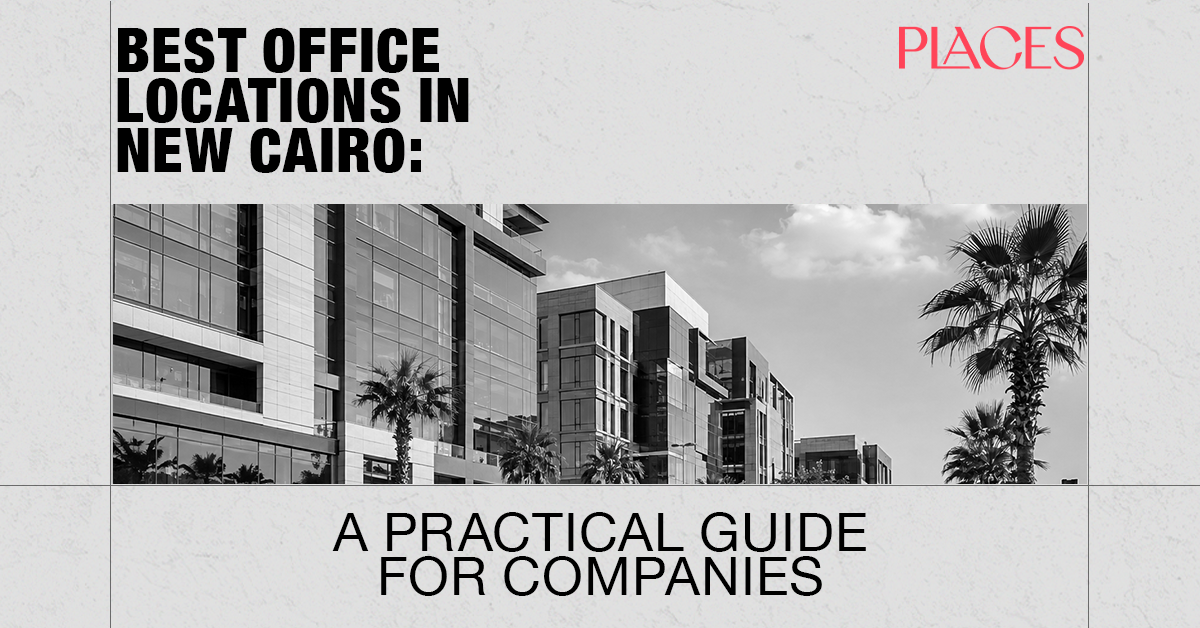
Choosing the best office location in New Cairo is not about finding the most famous street, the newest project, or the most attractive listing photos. The better answer is more practical: North 90 Street can suit client-facing companies that need visibility and a recognized address; South 90 Street can suit companies looking for a more balanced mix of access, newer projects, and operational calm; business parks can suit companies that care about image, building management, and long-term consistency; serviced offices can suit smaller teams, market-entry teams, and companies that need flexibility; and mixed-use districts can work well when nearby services and visitor access are part of the business need.
But none of these options is automatically right. A consulting firm, a technology company, a regional representative office, a training provider, a medical operator, and a back-office team do not need the same location, building, layout, parking setup, lease structure, or level of visibility. The right office location is the one that supports the way the company actually operates.
New Cairo has become one of Greater Cairo’s most important office destinations because it combines modern office supply, residential demand, road connectivity, business parks, mixed-use projects, and access to East Cairo and the New Administrative Capital corridor. But this strength also makes the decision harder. New Cairo is not one single office market. A unit on North 90 Street, an office in a corporate business park, a serviced workspace, and a space inside a mixed-use development can all behave very differently in daily use.
This guide is designed for companies, founders, regional teams, and operators who want to choose an office location in New Cairo with a business-first lens, not only a real estate lens.
Why New Cairo is a strong office destination
New Cairo has become a preferred office location for many companies because it offers a combination that older central districts may not always provide: newer buildings, stronger residential surroundings, better-planned developments in selected areas, access to East Cairo, and a growing concentration of commercial and administrative projects.
For companies serving the Fifth Settlement, Cairo Festival City, Heliopolis, Nasr City, New Cairo compounds, the New Administrative Capital corridor, or wider East Cairo, the area can be operationally practical. It allows companies to stay close to clients, employees, schools, residential communities, services, and major road networks.
For regional or international teams entering Egypt, New Cairo can also be a practical first base. It offers a professional address without requiring immediate commitment to a large owned headquarters. A company can start with a serviced office, move into a traditional leased office, or later consider buying a permanent office if the location proves operationally strong.
However, New Cairo’s popularity should not be confused with automatic suitability. A strong market can still contain weak individual decisions. Some offices are in good locations but poor buildings. Some buildings look modern but have weak parking or inefficient layouts. Some projects have strong branding but limited actual occupancy. The question is not simply: “Is New Cairo a good office market?” The better question is: “Which part of New Cairo fits our company’s operating model?”
Start with the operating model, not the listing photos
Many office searches begin with a simple request: “We need an office in New Cairo.” That is not enough. The same location can work very well for one company and fail for another because the companies use office space differently.
Before comparing locations, define how the office will be used. How many people will come every day? Will the team work full-time from the office, or will the company use a hybrid model? Will clients visit regularly? Do you need a reception area, meeting rooms, private offices, open workstations, storage, a pantry, training rooms, or executive space? Does the company need a visible address, or is the office mainly for internal work?
A consulting firm may need visibility, meeting rooms, parking, and a presentable entrance. A technology company may care more about layout flexibility, internet infrastructure, employee comfort, and access from residential areas. A regional team may need a ready-to-move setup with minimal friction. A training provider may need visitor flow, sound control, larger rooms, and easy access. A back-office operation may prioritize cost, layout efficiency, and daily employee commute over prestige.
When the operating model is clear, the search becomes sharper. The company is no longer looking for “any office in New Cairo.” It is looking for a location that supports the way the business works.
North 90 Street: visibility, recognition, and client access
North 90 Street is one of the most recognized office and commercial locations in New Cairo. Its strength is visibility. It is easy to describe, familiar to many clients and employees, and surrounded by services, banks, restaurants, retail activity, and administrative buildings. For client-facing companies, this recognition can be valuable.
North 90 Street can work well for professional services, consulting firms, law offices, financial advisory firms, training providers, medical-related administrative uses, and companies that host regular meetings. A clear address can reduce friction for visitors and support the company’s image.
But North 90 Street is not always the best choice. Some parts may come with traffic pressure, higher rent or purchase prices, limited parking, or uneven building quality. Being “on North 90” does not automatically mean the office is operationally strong. A weak building in a famous location can still create daily problems.
Companies considering North 90 Street should ask practical questions. Do we really need visibility? Will clients visit often enough to justify the premium? Is the building entrance presentable? Are elevators, security, parking, and maintenance reliable? Can employees reach the location without daily frustration? If the answer is yes, North 90 can be a strong choice. If not, the company may be paying for visibility it does not actually use.
South 90 Street: balance, newer projects, and operational calm
South 90 Street offers a different logic. It may appeal to companies looking for a balance between access, newer projects, and a calmer working environment in selected locations. It can suit companies that want to remain within New Cairo but do not necessarily need the highest level of street visibility or traffic exposure.
South 90 Street can be suitable for technology companies, internal teams, professional services with scheduled meetings, companies looking for larger or more efficient spaces, and teams that value a more controlled daily office experience. Some projects may offer a better sense of organization, newer buildings, or more balanced costs compared with highly visible locations.
The risk is that not every project is equally mature. A newer project may look good in brochures but still require careful checks around actual occupancy, surrounding services, access, parking, building management, and daily activity. A quiet location can be a positive sign of operational comfort, or it can be a sign that the project has not yet reached enough business activity.
The key is to evaluate the real building, not only the street name. Companies should visit during working hours, check occupancy, test access, review services around the project, and understand whether the location works today or depends heavily on future growth.
Business parks: stronger management and corporate image
Business parks and organized business districts can be attractive for companies that care about image, building management, visitor experience, and long-term operational consistency. Examples may include Cairo Business Park, Cairo Festival City, Mivida Business Park, Hyde Park Business District, District 5, and similar destinations.
The main value of a business park is that it usually offers more than a unit. It offers a managed environment: organized entrances, stronger common areas, better visitor experience, more coherent tenant mix, security, services, and a more corporate setting. For companies that regularly receive clients, partners, investors, or regional teams, this can matter.
Business parks can be suitable for established companies, regional offices, consulting firms, corporate branches, professional services, and companies that see the office as part of their brand. They can also be useful for teams that want a stable long-term base rather than a short-term practical office.
The trade-off is cost and commitment. Business parks may have higher rents, higher purchase prices, stricter management rules, more defined fit-out requirements, or less flexibility than smaller administrative buildings. For some companies, that premium is justified. For others, it may be more than the business needs.
The decision should be based on whether the company benefits from the corporate environment. If clients, employees, and brand perception will all benefit, a business park may be worth the premium. If the office is mainly for internal operations, a more practical building may deliver better value.
Serviced offices and flexible workspaces: speed and flexibility
Serviced offices can be a smart option for companies that need speed, flexibility, and low setup effort. They are especially relevant for startups, small teams, project-based teams, foreign companies entering Egypt, regional representative offices, or companies that are not yet ready to commit to a long lease or full fit-out.
The advantage is simplicity. A serviced office may include furniture, reception, internet, meeting rooms, cleaning, shared amenities, and shorter lease terms. This allows a company to start operating quickly without spending months on fit-out and setup.
But serviced offices are not always cheaper. They may have a higher cost per seat or per square meter. They also give the company less control over branding, privacy, layout, visitor experience, and long-term identity. For short-term needs, this trade-off may be acceptable. For a growing company that needs a stronger independent presence, a traditional leased office may become more suitable later.
A good strategy for some companies is to begin with a serviced office, learn the market, test team size and client flow, then move into a traditional office once the operating model is clearer.
Mixed-use districts: services, access, and daily convenience
Mixed-use districts combine office, retail, food and beverage, services, and sometimes residential or hospitality elements. These locations can be useful for companies that benefit from nearby amenities and visitor activity. They may suit training companies, service businesses, clinics or medical-related administrative uses, consulting offices, and companies that want employees and clients to have easy access to daily services.
The advantage is convenience. Employees can access food, cafés, banks, and services nearby. Clients may find the location easier to visit. The surrounding activity can make the office feel more connected and practical.
The risk is that mixed-use environments can become busy or distracting. A project with strong retail activity may not always provide the quiet, controlled environment that some companies need. Entrances, elevators, parking, visitor rules, and activity permissions should all be reviewed carefully.
The question is not whether a mixed-use district is good or bad. The question is whether the activity around the office supports the business or creates daily friction.
Smaller administrative buildings: practical, but require careful checks
Not every company needs a premium business park or a highly visible address. Smaller administrative buildings can be practical for startups, small and medium-sized companies, professional offices, and teams that need a functional workplace at a more accessible cost.
These buildings may offer flexible unit sizes, lower rent, more straightforward layouts, and quicker decision-making. For companies with limited client visits or internal-focused teams, this can be a sensible option.
However, smaller administrative buildings require careful due diligence. Parking, maintenance, security, elevator capacity, common areas, allowed activities, and building management can vary significantly. A lower-cost office may become expensive if the building experience is weak.
Before choosing this type of office, companies should test the building as users, not only as tenants or buyers. How does the entrance feel? Are visitors handled properly? Are the elevators reliable? Is maintenance visible? Does the tenant mix support the company’s image? These details can affect both daily operations and future marketability.
How to choose based on company type
A client-facing consulting firm may benefit from North 90 Street or a well-managed business park. The priorities are visibility, access, meeting rooms, parking, and a professional visitor experience.
A technology company may prefer South 90 Street, a flexible workspace, or a practical building with strong internet readiness, efficient layouts, natural light, and good access for employees. Visibility may be less important than comfort and flexibility.
A regional representative office may start with a serviced office or a ready-to-move space in a business park. The priority is speed, credibility, and low operational friction while the company tests the Egyptian market.
A training company needs visitor flow, room planning, sound control, parking, and access. A mixed-use district or visible administrative building may work if the project allows the activity and can handle visitor movement.
A medical-related administrative office or clinic-like professional use needs extra caution. The company should confirm permitted use, visitor experience, elevators, parking, and building rules before committing.
A back-office or internal operations team may not need a premium address. It may be better served by a cost-efficient, well-managed building with practical access, efficient layout, and stable services.
How to choose based on lease or purchase strategy
If the company is renting, flexibility matters. A company that is testing New Cairo may benefit from a serviced office, furnished office, or ready-to-move leased office before committing to a long-term location. Renting allows the company to test client movement, employee commute, parking, and area suitability.
If the company is buying, the decision needs deeper analysis. The office should not only work for the company today; it should also make sense to a future tenant or buyer. Location, building quality, usable area, finishing condition, parking, maintenance, and exit potential all matter.
A company buying for its own use may prioritize operational fit. An investor buying for rental income should prioritize tenant demand, practical unit size, building quality, holding cost, and resale logic. A business owner buying for both use and future flexibility should avoid highly customized spaces that may be difficult for another user later.
In both cases, the location must be evaluated beyond today’s need. The right office should remain understandable to the market if the company grows, relocates, leases the space, or sells it later.
Parking and access: not secondary details
Parking and access are often treated as details, but in New Cairo they can be decisive. For client-facing companies, poor parking can damage the visitor experience. For employee-heavy companies, daily parking pressure can affect punctuality, comfort, and retention. For investors, parking can influence tenant interest.
A strong office location should be tested during real working hours. Can employees and visitors reach the building easily? Are there multiple access routes? Is the entrance easy to explain? Is parking allocated, paid, shared, or limited? Are visitor spaces available? Does the project manage traffic well?
A beautiful office with poor access or weak parking can become an operational problem. A slightly less visible office with better access and building management may perform better in daily use.
Building quality matters as much as location
The office unit is only one part of the decision. The building experience shapes how the office performs. Entrances, elevators, security, reception, maintenance, common areas, restrooms, air conditioning systems, fire safety, signage rules, and visitor management all affect the company’s daily experience.
A company should evaluate the building like a client, not only like a tenant. Walk through the entrance. Use the elevator. Look at corridors and common areas. Ask about maintenance. Observe tenant mix. Check if the building feels active and professionally managed.
For companies, building quality affects brand perception and staff comfort. For investors, it affects rental demand and resale value. A well-managed building can protect the office’s value over time. A poorly managed building can weaken even a good unit.
Total cost: compare the real commitment
Office location decisions should not be based on rent or purchase price alone. The real cost includes rent or acquisition price, maintenance, fit-out, furniture, utilities, internet, parking, moving cost, time to operate, lease escalation, and exit conditions.
A ready-to-move office may look more expensive but reduce setup time and uncertainty. A core and shell office may look cheaper but require significant fit-out, approvals, contractors, and project management. A serviced office may have a higher monthly cost but include services and flexibility. A business park may cost more but provide stronger management and image.
The right comparison is not “Which option is cheaper?” It is “Which option gives the company the best operational value with the least avoidable risk?”
Common mistakes when choosing an office location in New Cairo
The first mistake is choosing based on photos. Photos show finishing and furniture, but they do not reveal access, parking, building management, noise, visitor experience, or inefficient layouts.
The second mistake is assuming all New Cairo locations are similar. North 90 Street, South 90 Street, business parks, serviced offices, and mixed-use districts serve different needs. The company should choose based on operating model, not familiarity.
The third mistake is overlooking employees. A location that impresses clients but exhausts the team may create hidden operational cost. Commute, comfort, layout, light, and nearby services matter.
The fourth mistake is ignoring total cost. Lower rent or price can become expensive after fit-out, maintenance, parking, delays, and lease terms. Higher cost can sometimes be justified if it reduces friction and supports business growth.
The fifth mistake is signing before testing the building. The office may look good, but the building experience may be weak. This can affect clients, employees, and future marketability.
The sixth mistake is not thinking about the next stage. A small company may grow. A team may shift to hybrid work. A regional office may need more control later. The chosen location should leave room for change.
How Places helps companies choose office locations in New Cairo
At Places, we do not treat the office search as a list of available units. We start with the business behind the space: team size, client movement, operating model, budget, lease flexibility, ownership plans, fit-out needs, and growth expectations.
For one company, the right answer may be North 90 Street because visibility and client access matter. For another, South 90 Street may offer better balance. For a regional team, a serviced office may be the right first step. For an established company, a business park may support brand image and long-term consistency. For an investor, the best location may be the one with the clearest tenant profile and resale logic.
Our role is to help companies read beyond the listing: the location, building, access, parking, layout, total cost, lease or purchase terms, and future flexibility. In a market with many options, clarity is the real advantage.
The goal is not to choose the most famous office location in New Cairo. The goal is to choose the location that helps the company operate better.
Frequently asked questions about office locations in New Cairo
What is the best office location in New Cairo?
There is no single best location for every company. North 90 Street may suit client-facing companies that need visibility. South 90 Street may suit companies looking for balance and newer projects. Business parks may suit companies that need corporate image and stronger management. Serviced offices may suit flexible or market-entry teams.
Is North 90 Street better than South 90 Street?
Not always. North 90 Street is often stronger for visibility and recognized access, while South 90 Street may offer a calmer environment, newer projects, or better value in some cases. The right choice depends on clients, employees, building quality, parking, and cost.
Are business parks in New Cairo worth the higher cost?
They can be worth it for companies that benefit from stronger building management, corporate surroundings, visitor experience, and brand perception. For companies that mainly need internal operations, a simpler office may offer better value.
Should a startup choose a serviced office in New Cairo?
A serviced office can be suitable for startups that need flexibility, speed, and low setup effort. It may not be ideal for companies that need long-term brand control, privacy, or a customized layout.
What should companies check before choosing an office location?
Companies should check access, employee commute, client movement, parking, building quality, layout efficiency, lease or purchase terms, total cost, and room for future growth.
Is New Cairo suitable for international or regional companies?
Yes, New Cairo can be suitable for international or regional companies because it offers modern office options, professional environments, serviced offices, business parks, and access to East Cairo. However, the location should match the company’s client base, team needs, and operating model.
Should a company rent or buy an office in New Cairo?
Renting is often better when the company needs flexibility or is still testing the market. Buying may be suitable when the company is stable, has a clear long-term need, and can own without pressuring operations. The decision should consider both business use and future exit options.
Final thoughts
The best office location in New Cairo is not necessarily the most visible, the newest, or the most expensive. It is the location that fits the company’s operating model.
North 90 Street can be powerful for visibility and client access. South 90 Street can offer balance and newer project options. Business parks can support corporate image and long-term consistency. Serviced offices can provide speed and flexibility. Mixed-use districts can offer convenience and services. Smaller administrative buildings can be practical when cost and function matter more than prestige.
The right decision starts with the business: employees, clients, meetings, budget, lease or purchase strategy, parking, fit-out, and growth. When these elements are clear, New Cairo becomes easier to read. The company is no longer choosing from random listings. It is choosing a location that can support how the business works today and how it may grow tomorrow.
Leave a Reply